top of page
标准标志苍绿白底.png

The Institute of Chest Wall Surgery

ICWS Condition Banner.png

Asphyxiating Thoracic Dystrophy

Introduction

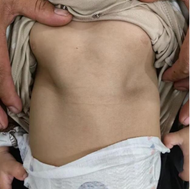
Asphyxiating thoracic dystrophy (ATD), also known as Jeune syndrome, is an extremely rare chest wall deformity characterized by an abnormally developed thoracic cavity and often involves dysfunction of multiple organs.

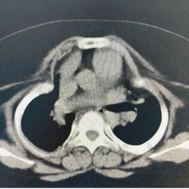
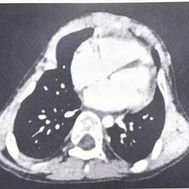
ATD can be classified into two types. Type I ATD is characterized by overall narrowing of the thoracic cage, with both the transverse and anteroposterior diameters markedly reduced compared with a normal chest. Type II ATD is a distinct form of thoracic narrowing, primarily characterized by extensive bilateral depressions of the lateral chest walls. The depressions involve multiple ribs and  often extend to the costal arches. 


The constriction of the chest severely impairs respiratory function, making ATD a critical condition. Most patients succumb to hypoxia soon after birth.
Causes


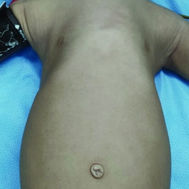
The cause of primary ATD remains unclear. It may be related to genetic factor, gene mutation or abnormal growth direction of the ribs and costal cartilages.

Secondary ATD is caused by chest wall deformity surgery. Such patients have undergone open surgery for thoracic deformity, during which their costal cartilages were excised. After the surgery, due to the inability of the remaining bone structure to regenerate, the chest cavity becomes constricted, and the intrathoracic organs are constantly compressed, thereby affecting various physiological functions of the patients.

Symptoms


Common symptoms of ATD include a narrow chest, breathing difficulty, and recurrent respiratory infection. As the disease progresses, it can affect other organs, leading to complications such as renal failure and liver dysfunction. Additionally, patients with this condition often exhibit short stature and disproportionate limb growth, with approximately 20% of them presenting with polydactyly (extra fingers or toes).


Diagnosis involves assessing the patient’s clinical manifestations and physical signs, along with imaging examinations such as X-ray, chest CT scan, and 3D reconstruction.

Surgical Procedures


Chest Wall Expansion Surgery:

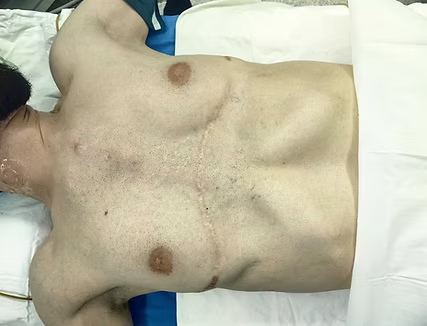
Chest wall expansion surgery, an innovative procedure invented by ICWS, is mainly indicated for patients with Type I  ATD.  Based on the surgical approach, it can be categorized into midline chest wall expansion and lateral chest wall expansion.


The midline chest wall expansion enlarges the thoracic cavity by incising the sternum through a midline chest wall incision and using MatrixRIB plates to spread the sternum apart. In contrast, the lateral chest wall expansion increases thoracic capacity by cutting the ribs on both sides from the midline and connecting them with MatrixRIB plates.


This combined surgical approach is applicable for the majority of patients with Type II ATD. Most of these patients exhibit both anterior chest wall protrusion and lateral chest wall depressions, which can be simultaneously corrected using the Wenlin procedure. However, since the lateral chest wall depressions are extensive, the Wenlin procedure is often insufficient to achieve full correction, and the Wang procedure is subsequently performed to address residual depressions in the lower lateral chest wall, ultimately restoring the overall contour of the chest wall.

In addition, for a minority of Type II patients presenting with isolated lateral chest wall depression, the Wang procedure alone is adequate for correction.

Diagnostic Methods

bottom of page