Wang procedure
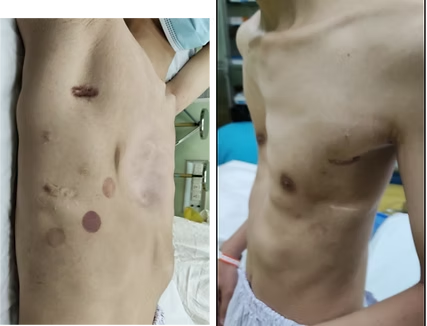
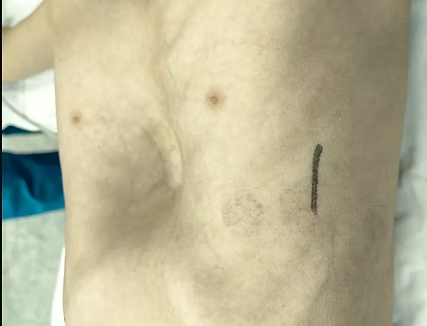
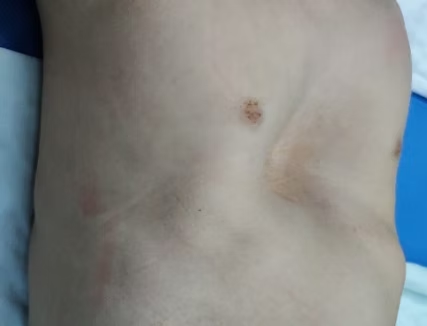
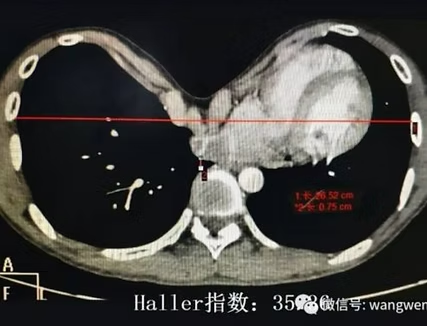
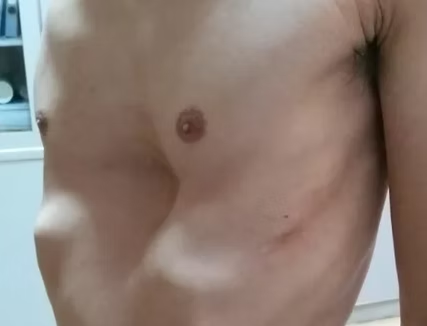
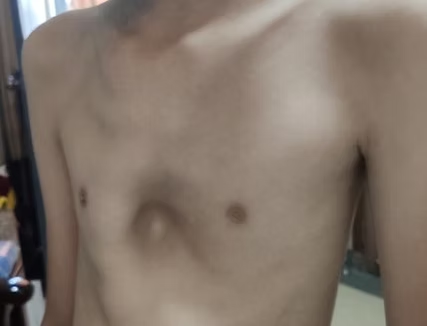
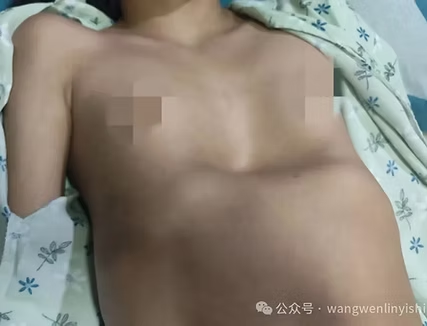
The Wang procedure is a new-generation minimally invasive surgical technique specifically designed for the treatment of pectus excavatum. Its operative principles and surgical steps differ entirely from traditional pectus excavatum repair procedures, such as the Ravitch procedure and the Nuss procedure.
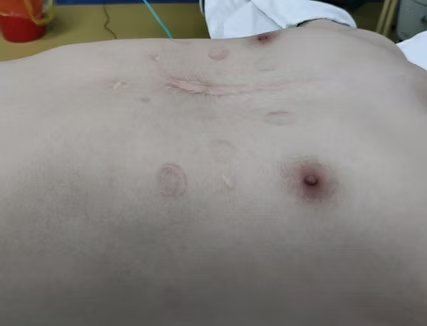
This innovative technique offers several significant advantages, including reduced surgical trauma, a shorter recovery period, and, importantly, effective protection against cardiac injury. It is particularly suitable for pediatric patients under the age of 5, with outcomes that are more stable and long-lasting.
Wung procedure
The Wung procedure is a novel form of pectus excavatum repair developed to address the limitations of the Nuss procedure. Although both techniques are based on similar fundamental surgical principles, the Wung procedure incorporates multiple innovations and refinements at each stage, including safer and more streamlined techniques for bar placement and fixation.
These improvements significantly enhance the safety, reliability, and effectiveness of the procedure, while also reducing the risk of complications and shortening postoperative recovery time.