The 10th Latest Chest Wall Surgery Technology Global Training Program and the Second Global Chest Wall Surgery Conference brought together specialists from 10 countries to share knowledge, improve surgical techniques, and help more patients benefit from advances in chest wall surgery.
From July 15 to 18, the Institute of Chest Wall Surgery in Guangzhou, China, hosted the 10th Latest Chest Wall Surgery Technology Global Training Program alongside the Second Global Chest Wall Surgery Conference, welcoming more than 25 international surgeons and specialists from 10 countries and regions.
For patients living with chest wall deformities, the event represented more than an academic conference. It reflected a growing international effort to make specialized chest wall surgery safer, more standardized, and more accessible to patients around the world.
During four days of lectures, live surgeries, and clinical discussions, surgeons from countries including the United States, Japan, Russia, Türkiye, Malaysia, Nepal, Armenia, Uzbekistan, Bangladesh, and South Korea exchanged ideas, shared clinical experience, and explored new approaches to treating both common and complex chest wall conditions.
Live Surgical Training Showcases Advanced Patient Care
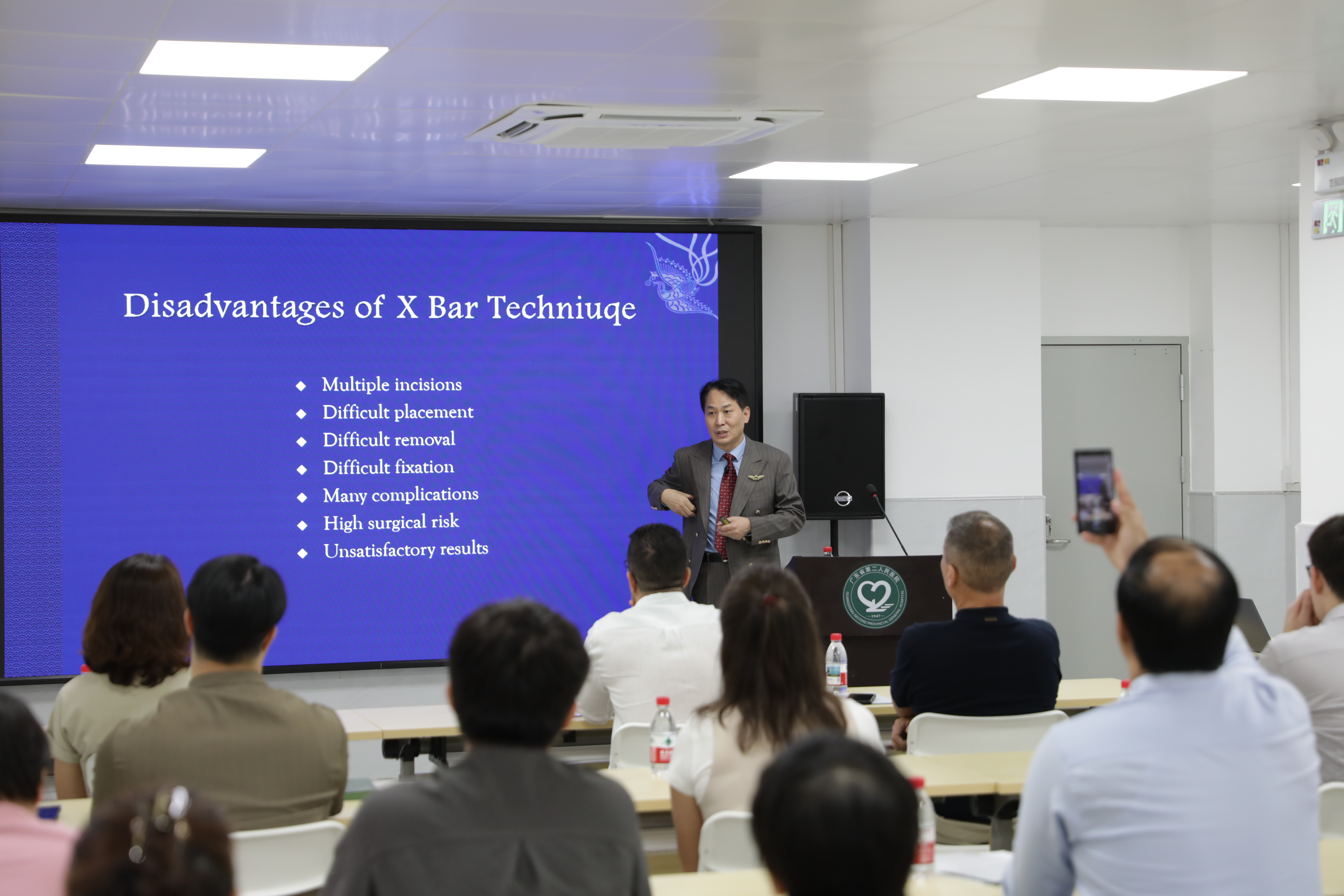 Professor Wenlin Wang delivers a lecture during the training program.
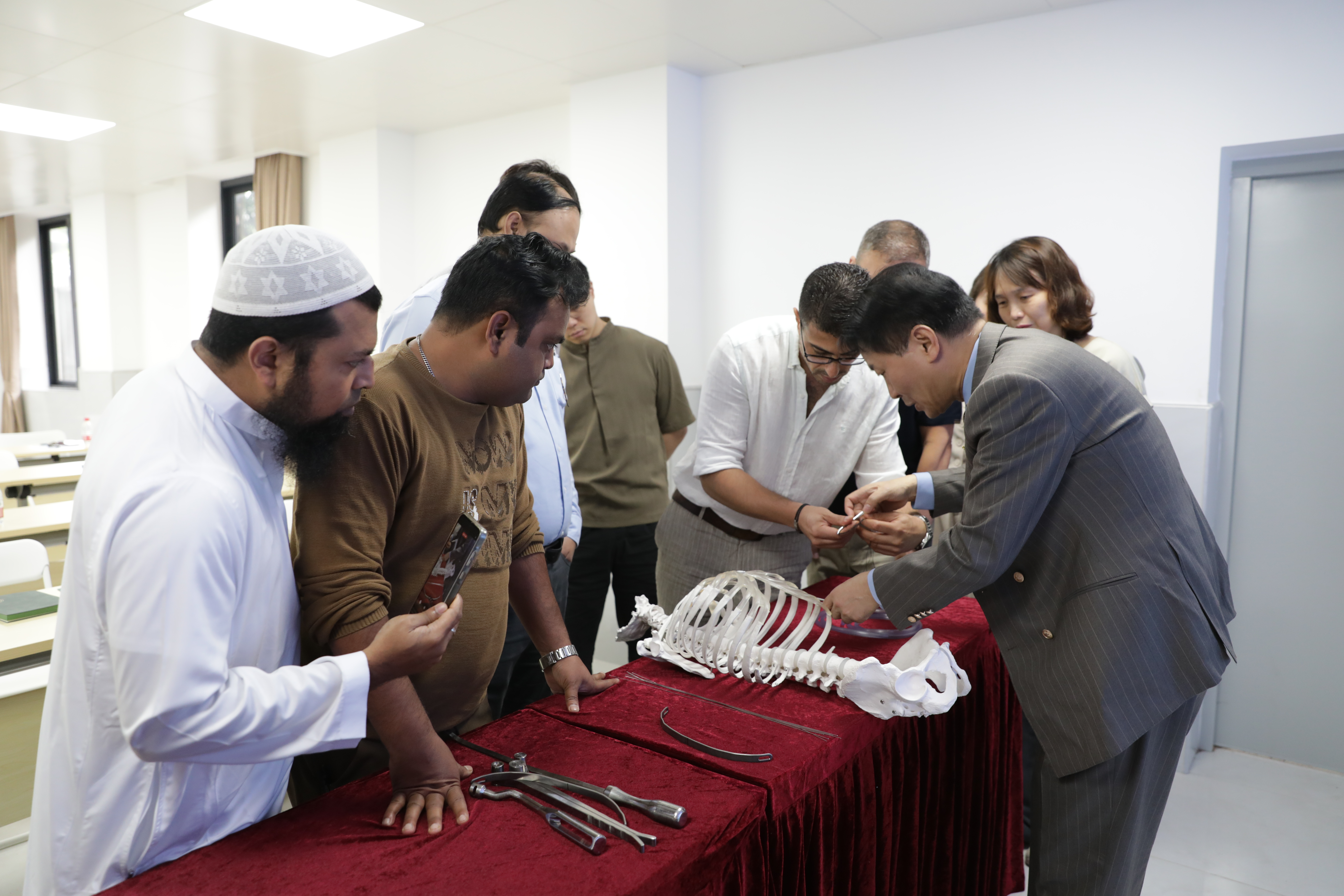 Professor Wenlin Wang demonstrates surgical techniques and explains key procedures to foreign surgeons.
Before the conference officially opened, the three-day training program provided visiting surgeons with an immersive clinical experience.
Ten surgeons from Asia and Europe observed live operations performed on 81 patients between the ages of 8 and 30. Because the program took place during the summer school holiday, many of the patients were school-aged children and teenagers undergoing corrective surgery before returning to class.
The cases represented a wide spectrum of chest wall conditions, including:
- Pectus excavatum (including asymmetric pectus excavatum and recurrent pectus excavatum)
- Pectus carinatum
- Barrel chest
- Flat chest
- Costal arch deformity
- Jeune syndrome (asphyxiating thoracic dystrophy)
- Complex chest wall deformities
 Professor Wenlin Wang discusses the diagnosis and treatment of chest wall deformities with participants through a clinical case.
Rather than focusing only on surgical techniques, the program introduced participants to the complete treatment process—from patient evaluation and surgical planning to intraoperative decision-making and postoperative management. By observing real cases and discussing treatment strategies with the surgical team, participants gained practical insight into individualized care for patients with different types of chest wall deformities.
During the training, Professor Wenlin Wang and his team demonstrated several techniques developed at the Institute of Chest Wall Surgery, including the Wang Procedure and the Wung Procedure for pectus excavatum, the Wenlin Procedure for pectus carinatum, and the Wang Technique for bar fixation.
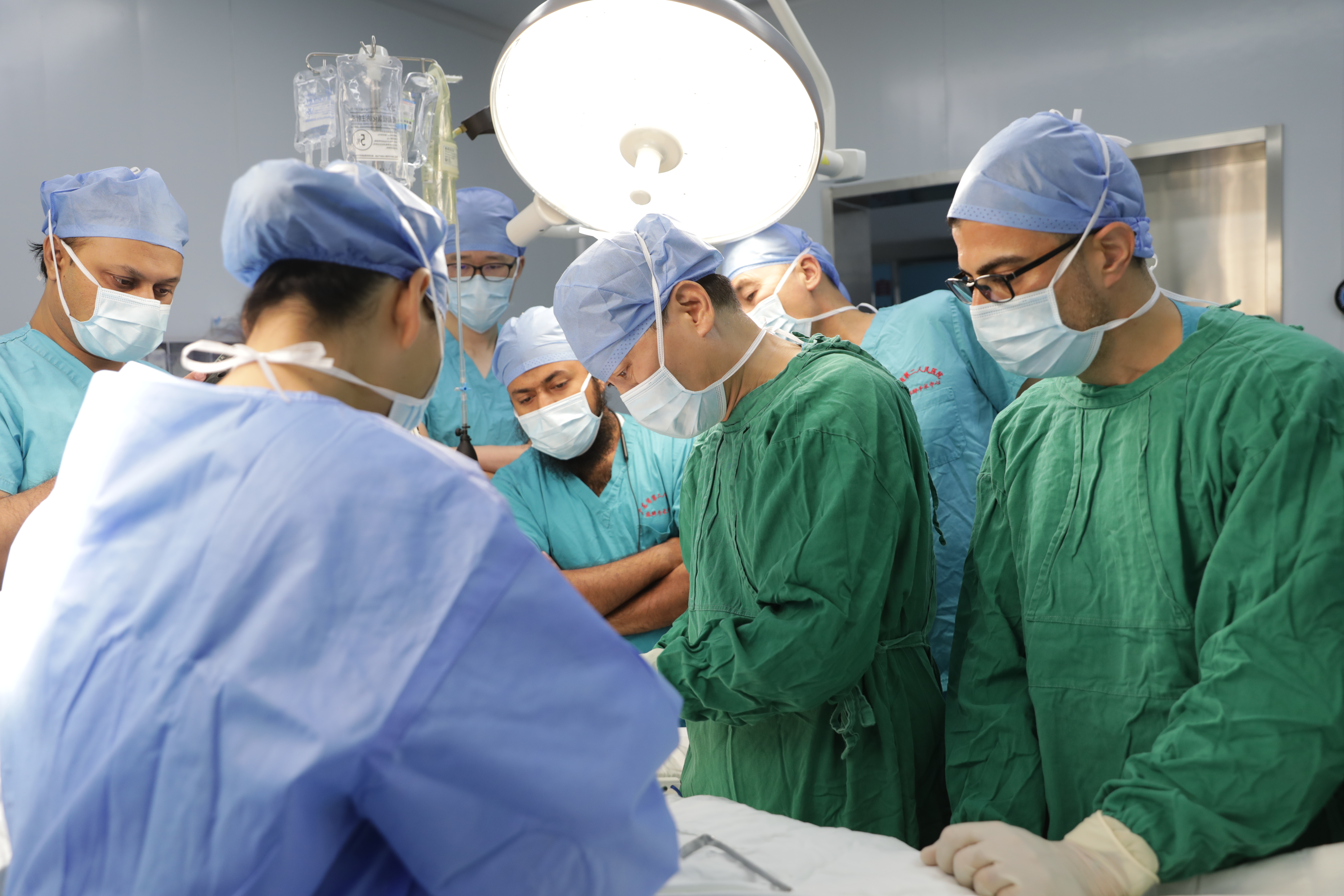 International surgeons observe live chest wall surgery during the training program.
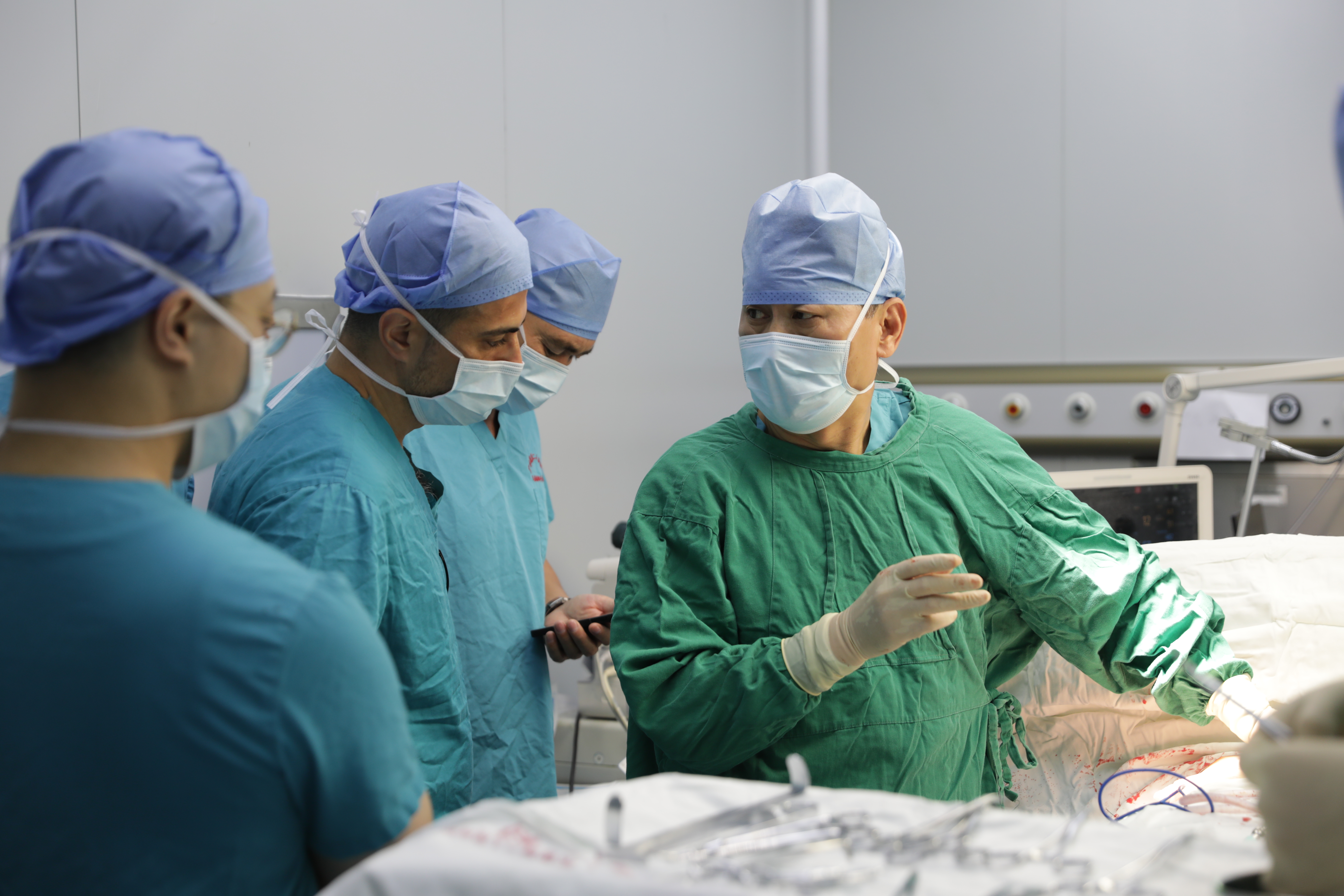 Professor Wenlin Wang explains key surgical techniques during a live operation.
These procedures have been developed and refined through years of clinical practice to provide surgeons with more flexible treatment options for patients with different anatomical characteristics and varying degrees of deformity.
Restoring Hope for Patients with Complex Conditions
The surgical cases performed during the program also highlighted how individualized treatment plans can help patients whose conditions are considered especially challenging.
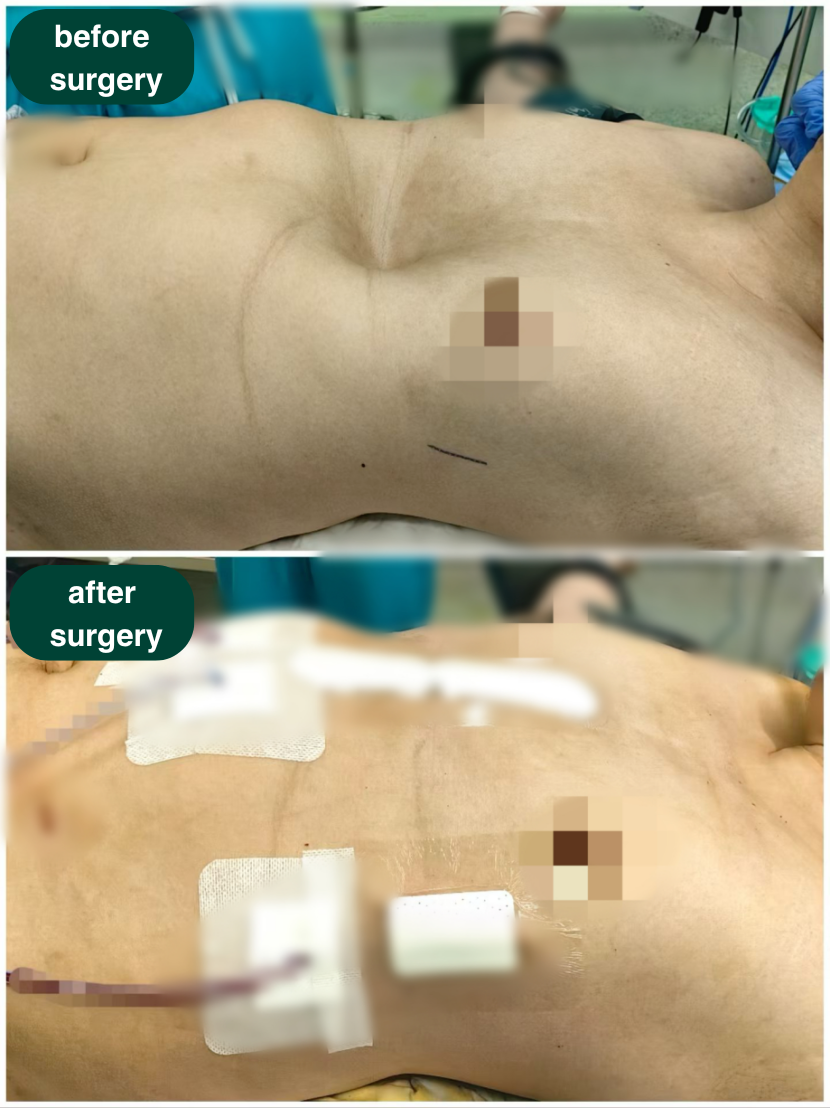
One patient was a 21-year-old university student with severe pectus excavatum combined with scoliosis. Standing 196 centimeters tall, he had an unusually large and rigid chest wall, making conventional corrective procedures difficult. His sternum was deeply depressed against the heart, and after seeking treatment at multiple hospitals, he had repeatedly been told that surgery carried excessive risk.
At the Institute of Chest Wall Surgery, the team developed a personalized surgical plan that combined the Wung Procedure with the Wang Procedure. During the operation, the team further applied the “pre-shaping” technique to minimize risks while achieving effective chest wall correction. The operation successfully achieved the desired chest wall correction, offering the patient a personalized treatment approach tailored to his unique condition.
Learn more about our pre-shaping technique →
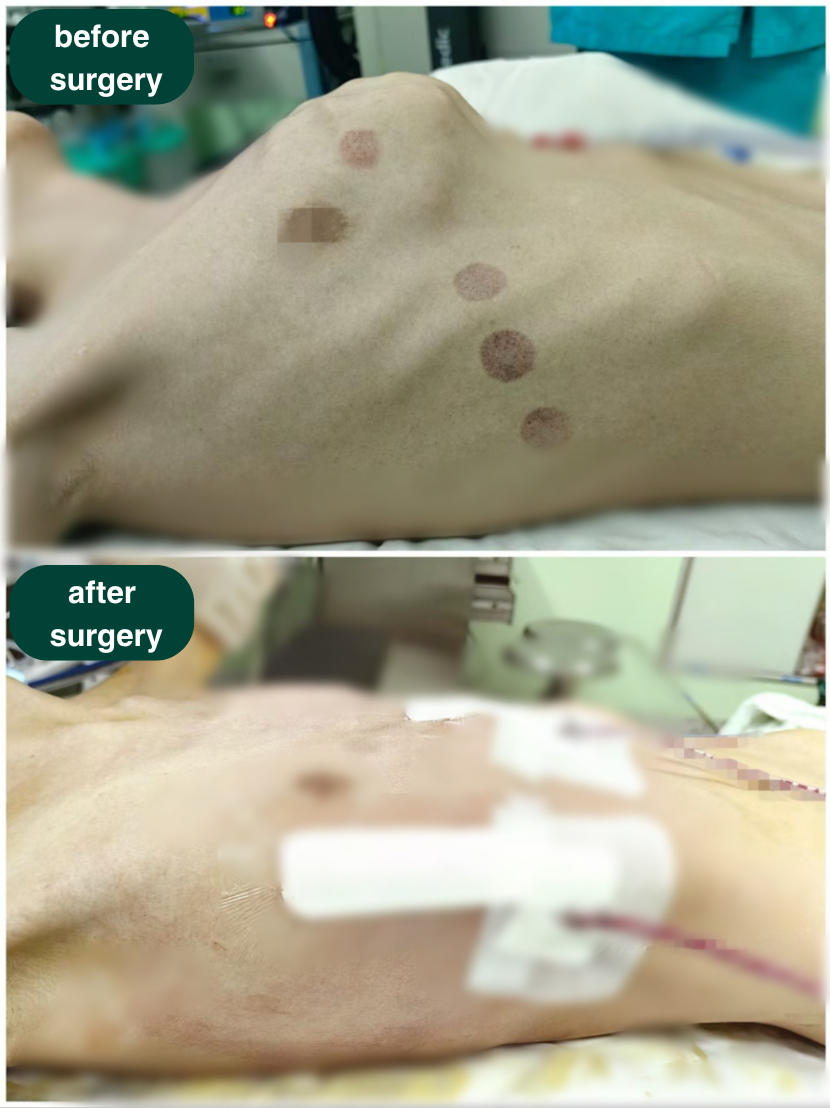
Another memorable case involved a 15-year-old boy with rare complex chest wall deformities affecting both the upper and lower chest. His condition was further complicated by persistent pneumothorax, which had failed to heal despite previous treatment at another hospital.
After comprehensive evaluation, ICWS surgeons performed a single minimally invasive operation that simultaneously treated the underlying lung disease and corrected the chest wall deformity. The procedure, completed in less than two hours, included thoracoscopic removal of diseased lung tissue followed by chest wall correction using a combination of the Wenlin Procedure and the Wang Procedure. The team also applied the Wang Technique for bar fixation, ensuring structural stability and reducing the risk of postoperative complications.
International Experts Discuss the Future of Chest Wall Surgery
On July 18, the Second Global Chest Wall Surgery Conference brought together approximately 100 participants to discuss advances in the diagnosis and treatment of chest wall diseases.
 The Second Global Chest Wall Surgery Conference in progress.
 Participants engage in discussions during the conference.
During the conference, 18 experts from around the world delivered presentations on the latest advances in chest wall surgery. Their talks covered a wide range of topics, including chest wall deformities, chest wall tumors, wound management, chest wall trauma, straight back syndrome, chylothorax, chest wall infections, Jeune syndrome, minimally invasive surgery, and multidisciplinary treatment strategies.
Professor Wenlin Wang and his colleagues also presented the Institute’s clinical experience in managing complex chest wall conditions and shared the principles behind the surgical techniques developed at the center.
Among these, the Wang Procedure attracted particular interest from international participants. Unlike the traditional Nuss procedure, which requires the corrective bar to pass behind the sternum close to the heart, the Wang Procedure achieves correction without placing the bar into the thoracic cavity, thereby avoiding the risk of cardiac injury while expanding treatment options for children under 5 years old. To date, more than 600 Wang Procedures have been successfully performed.
The conference also featured discussions on the Wung Procedure, which further refines minimally invasive correction for pectus excavatum, and the Wenlin Procedure, which offers an effective solution for patients with pectus carinatum and other protruding chest wall deformities.
English Edition of Chest Wall Surgery

Unveiling ceremony of the English edition of Chest Wall Surgery
Another highlight of the conference was the introduction of the English edition of Chest Wall Surgery, a comprehensive textbook focusing on the theory, clinical practice, and surgical techniques of chest wall surgery.
Edited by Professor Wenlin Wang and translated into English by Professor Rajkamal Vishnu of Cleveland Clinic Children’s Hospital, the book has been published by Morland Publishing Ltd. It provides a systematic overview of chest wall surgery, covering congenital deformities, chest wall tumors, chest wall defects, trauma, infections, and the surgical techniques developed through years of clinical practice.
The publication is expected to make specialized knowledge in chest wall surgery more accessible to surgeons around the world and support the continued development of the field internationally.
Looking Ahead
Since the launch of the program, the Latest Chest Wall Surgery Technology Global Training Program has grown into an important platform for global education and collaboration. By combining live surgical training with academic exchange, the program enables surgeons from different countries to learn from one another and expand access to advanced treatment for patients worldwide.
During the conference, organizers also announced that the Third Global Chest Wall Surgery Conference will be held in Istanbul, Türkiye, marking the beginning of a rotating international host model.
As international collaboration continues to grow, the Institute of Chest Wall Surgery remains committed to developing safer surgical techniques, advancing clinical research, and training surgeons from around the world—so that more patients with chest wall deformities can benefit from effective, individualized treatment regardless of where they live.
.png)
.png)