
If you have been diagnosed with pectus excavatum, you may have quietly wondered: does anyone else have this, just like me? That instinct makes sense. Seeing well-known actors, athletes, and musicians live full, active lives with pectus excavatum can turn that private worry into reassurance. This article highlights several such cases and explains when pectus excavatum may call for professional evaluation, helping you better understand the condition and relevant treatment options.
What Is Pectus Excavatum?
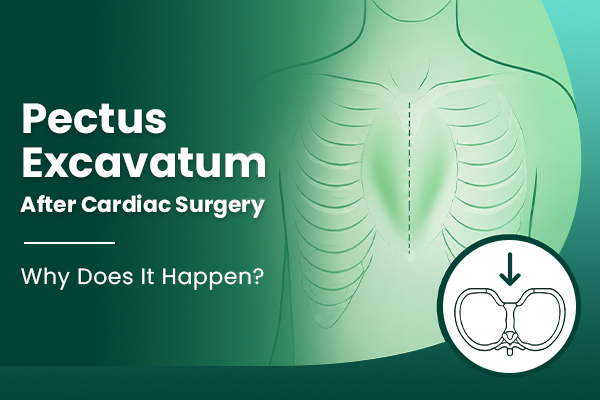
Pectus excavatum, also known as funnel chest or sunken chest, is a congenital deformity of the chest wall. The middle and lower portions of the sternum, along with the adjacent costal cartilages, curve inward rather than outward, forming a funnel-shaped depression.
Symptoms vary widely depending on severity.

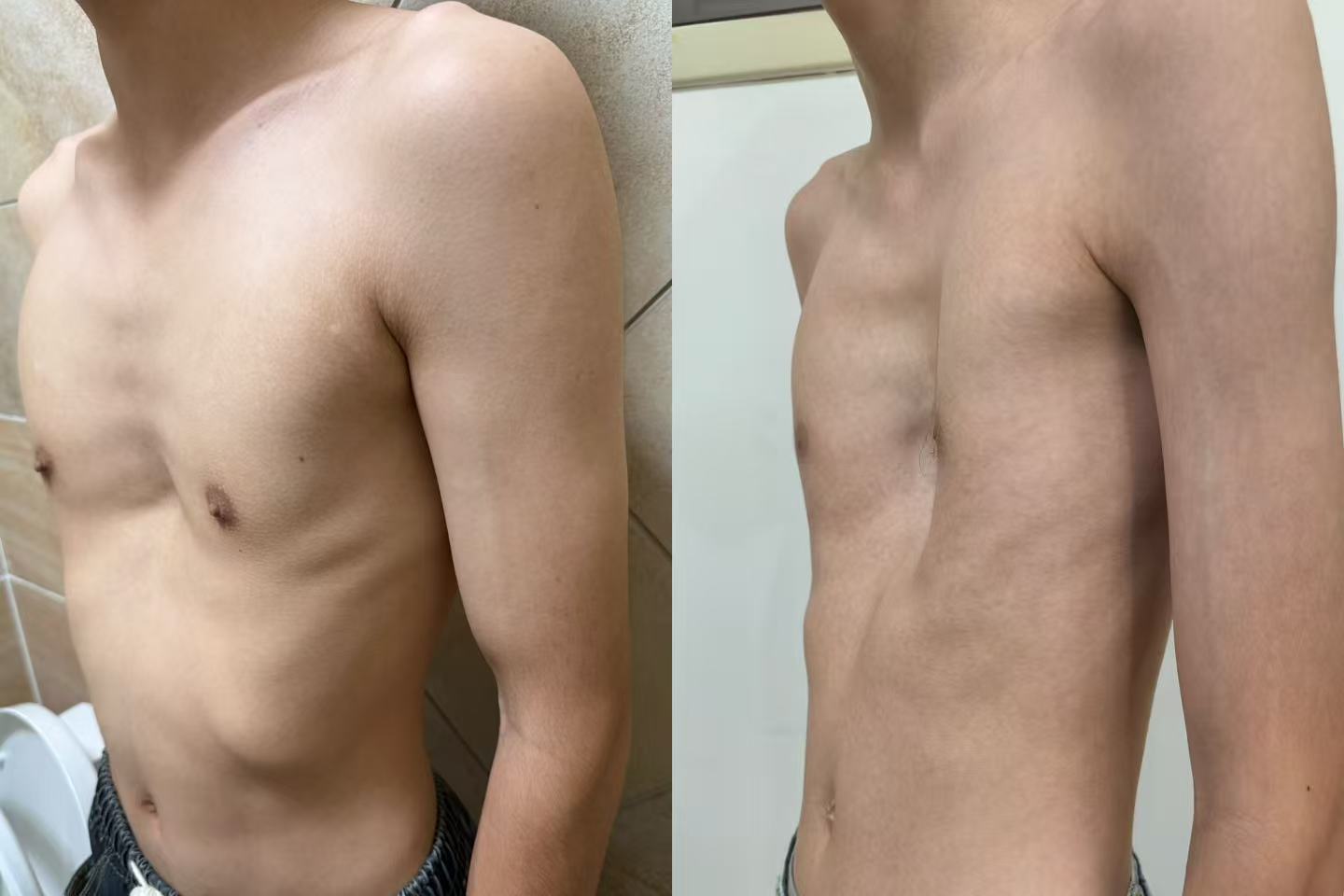
Mild pectus excavatum typically causes no significant health problems or noticeable symptoms beyond the visible chest shape.
Severe pectus excavatum, by contrast, can compress the heart and lungs and may involve:
- Palpitations, shortness of breath, and respiratory difficulty
- Loss of appetite, indigestion, or delayed growth and development
- Recurrent upper respiratory tract infections
- Increased psychological stress
- Scoliosis, more common with longer-standing or more severe deformities
Pectus excavatum is, in fact, the most common congenital chest wall deformity. It affects an estimated 1 in 300 to 400 births[1], and is also markedly more common in males, at a male-to-female ratio of about 5:1[1]. That imbalance is part of why most publicly known cases involve men, though women live with pectus excavatum too.
Male Celebrities with Pectus Excavatum
One recent example that has drawn attention is Christopher Briney, known for playing Conrad in "The Summer I Turned Pretty." Fans have noticed his chest shape during shirtless scenes. Discussion around him and pectus excavatum has since helped bring more everyday visibility to a condition that many patients quietly manage on their own.
His case is far from unique, though:
- Joaquin Phoenix – The Oscar-winning actor has a visible chest depression that has never limited his range of physically demanding roles.
- Sylvester Stallone – Known for Rocky and Rambo, he is reported to have a mild case largely masked by his muscular build.
- Tom Holland – Spider-Man's on-screen agility shows that a mild deformity is no obstacle to physical performance.
- Brendan Fraser – His action roles in The Mummy franchise demonstrate the same point.
- Neil Patrick Harris – Noted for a mild, barely visible form of the condition.
- Cody Miller – An Olympic gold-medalist swimmer who chose not to pursue surgical treatment, despite the deformity affecting his lung capacity.
- Charlie Puth – Has careers spanning music and film despite the condition.
- Brandon Routh – The actor who played Superman has a visibly noticeable depression.
- Aaron Taylor-Johnson – A Marvel action star whose case has been discussed in fan and medical forums alike.
- Oscar Isaac – Known for Star Wars and Dune, with a mild form of the deformity.
- Zach Woods – Known for roles in The Office and Silicon Valley, Woods has publicly discussed having pectus excavatum, offering a rare example of an actor speaking directly about the condition.
- Joel Kinnaman – The RoboCop and The Suicide Squad actor has been publicly reported to have undergone corrective surgery for pectus excavatum.
- Billy Zane – Best known for playing Cal Hockley in Titanic, Zane has been publicly listed among actors with pectus excavatum.

 Cody Miller, Olympic gold medalist swimmer, has pectus excavatum (funnel chest), a condition characterized by an inward depression of the breastbone. Despite this, he went on to win an Olympic gold medal.
Female Celebrities with Pectus Excavatum
Pectus excavatum is documented far less often in women, and the reason may involve not only differences in prevalence but also diagnostic and statistical factors: chest wall deformities often worsen during the rapid growth and development of early adolescence, which is also when breast development occurs in females. This may mask the severity of the deformity, and women may also be more likely to conceal chest wall deformities through cosmetic surgery[2].
Even so, a few female celebrities have spoken openly about living with the condition:
- Hayden Panettiere – Best known for her role in Heroes, she has a mild case that reportedly became more noticeable after breast augmentation, a reminder that the depression itself does not go away on its own.
- Tori Spelling – The Beverly Hills, 90210 actress has spoken candidly on her podcast about living with pectus excavatum, describing it as a genetic "bone thing" that breast implants alone cannot correct.
Together, these male and female examples make one thing clear: pectus excavatum has not stopped these individuals from building visible, demanding careers. What varies is how each person's chest wall affects them physically, and that difference is exactly what determines whether treatment is ever needed.
Disclaimer:
The above list is compiled solely from publicly available and verifiable information. It does not constitute a medical diagnosis or a determination of any individual's health status. ICWS makes no representations or warranties regarding the completeness, accuracy, or timeliness of the information. This content is not intended to infringe on personal privacy and is provided solely for informational and reference purposes.
When Should Pectus Excavatum Be Evaluated or Treated?
Not every case needs surgery. Whether pectus excavatum treatments are worth pursuing comes down to how much the deformity affects you physically and emotionally, and treatment generally falls into two categories based on severity.
Conservative management suits milder cases and typically includes:
- Physical therapy aimed at improving posture and chest wall muscle tone
- Vacuum bell therapy, which uses external suction to gradually draw the sternum outward in growing children and adolescents whose chest wall is still flexible
- Surgical treatment may be considered when:
- The depression compresses the heart or lungs, causing palpitations, shortness of breath, or reduced stamina
- The deformity is visibly progressing, which often happens during adolescent growth spurts
- The appearance causes ongoing self-consciousness or distress that affects daily life, confidence, or willingness to be seen without a shirt
- When one or more of these concerns are present, specialist evaluation can help determine whether surgical correction is appropriate. For a deformity that has become structurally fixed at a moderate or severe stage, surgery provides direct structural correction by reshaping the bony chest wall. Surgical techniques for pectus excavatum have advanced considerably from traditional open chest wall procedures involving extensive cartilage and bony-structure manipulation.
| Procedure | Typical Candidates | Incision Size | Cardiac-Risk Considerations |
|---|---|---|---|
| Nuss Procedure | Generally patients over 5 years old with moderate to severe pectus excavatum and sufficient chest wall rigidity | Two to four lateral incisions, approximately 2–4 cm each, depending on the technique | The bars need be inserted into the thoracic cavity, passed across the surface of the heart, and brought out through the chest; they are then flipped within the thoracic cavity to elevate the sunken chest wall— a process that carries a significant, well-recognized risk of cardiac injury. |
| Wang Procedure | Often selected for young children, including infants; may also be used for selected complex, asymmetric, secondary, or revision cases | One midline, usually about 1–2 cm | The bar is placed on the surface of the depressed bony structures, and wires are used to lift the sunken chest wall— completely avoiding direct contact with the heart and thereby eliminating the potential risk of cardiac injury. |
| Wung Procedure | Typically suitable for patients over 5 years old, it is particularly appropriate for those with severe chest wall deformities, a higher risk of cardiac injury, or recurrent deformities following a failed initial procedure who require revision surgery. | Two lateral incisions, usually about 1–2 cm each | Developed as a modification of the classic Nuss procedure, the Wung procedure uses a "finger-guided" technique for plate placement, an innovative approach that significantly reduces the risk of inadvertent cardiac injury while simplifying the surgical procedure. |
The Wang procedure and Wung procedure in particular were designed with smaller incisions and faster recovery in mind. Most patients return to normal work or school, aside from heavy physical labor, within about one month. Light exercise such as jogging or hiking can typically resume within the first three months, with intensity increased gradually from there. Once the bar is eventually removed, patients are not restricted from any sport or activity.
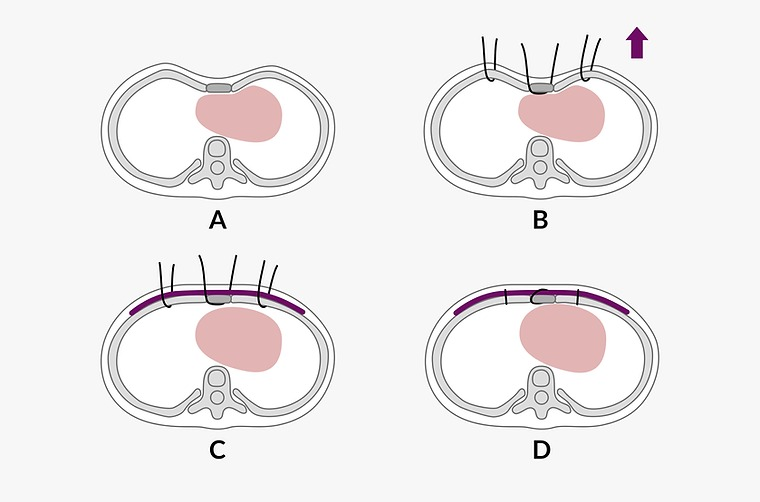
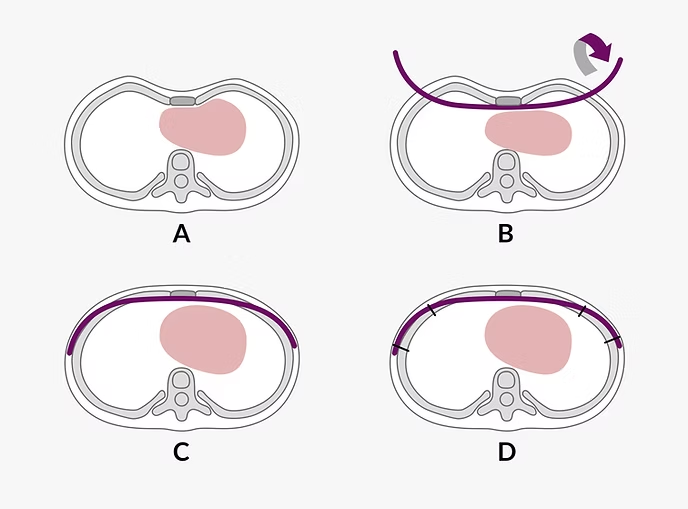
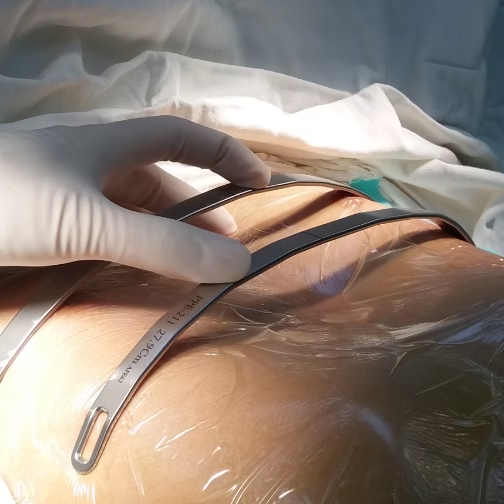
Surgical technique illustration of the Wung procedure
Explore more surgical details:
What are the differences between the Wang procedure and the Nuss procedure?
What special types of pectus excavatum(PE) are suitable for the Wang procedure?
What should I do after the Wang Procedure?
Finding Expert Support at ICWS
Pectus excavatum has not stopped the celebrities above from thriving, and it does not have to define your story either. If symptoms or lasting self-consciousness are affecting your daily life, ICWS is here to help. ICWS is the world's first independent surgical institution dedicated to chest wall disorders and the world's largest center for chest wall deformity correction. Both the Wang procedure and Wung procedure were developed by our own surgical team, and the Wang procedure has since been recognized in China's official surgical guidelines. For patients who do want a professional opinion, reach out to ICWS for a personalized evaluation and consultation.
References
1. Sonel Tur, B., & Genç, A. (2025). An overview of pectus deformities and rehabilitation approaches. Turkish Journal of Physical Medicine and Rehabilitation, 71(2), 131–138. https://doi.org/10.5606/tftrd.2025.16840
2. Ravanbakhsh, S., Farina, J. M., Bostoros, P., Abdelrazek, A., Mi, L., Lim, E., Mead-Harvey, C., Arsanjani, R., Peterson, M., Gotimukul, A., Lackey, J. J., & Jaroszewski, D. E. (2022). Sex Differences in Objective Measures of Adult Patients Presenting for Pectus Excavatum Repair. The Annals of thoracic surgery, 114(4), 1159–1167. https://doi.org/10.1016/j.athoracsur.2021.08.060
.png)
.png)