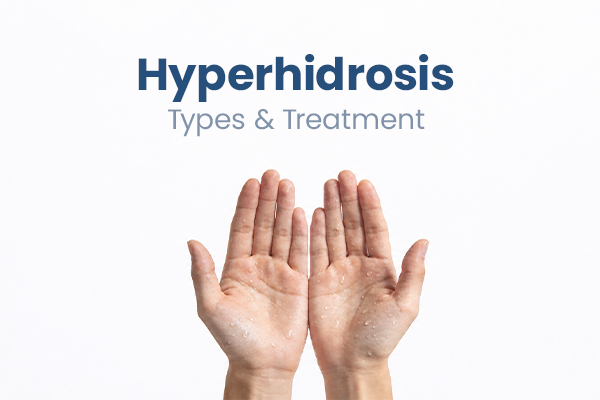

If you frequently experience excessive sweating that soaks your clothes, interferes with your work, or causes embarrassment in social situations, you may be suffering from hyperhidrosis. One of the most common concerns among patients is: Can hyperhidrosis be cured? Or, how to prevent excessive sweating effectively?
In reality, the answer depends on the type of hyperhidrosis, its underlying causes, and the treatment approach chosen. This article provides a systematic, professional, and practical overview for both clinicians and patients.
Hyperhidrosis
Basic Understanding: What is Hyperhidrosis?
Hyperhidrosis refers to abnormally increased sweating in localized or generalized areas of the skin, commonly affecting the palms, soles, underarms, face, or multiple sites. This is a medical condition in which sweat production far exceeds the levels needed for thermoregulation.
Although medically benign and not life-threatening, hyperhidrosis can cause significant social and psychological distress.
Hyperhidrosis can first be classified based on its cause:
-
Primary (idiopathic) hyperhidrosis: The exact cause is unknown, but it is widely suspected to result from overactivity of the sympathetic nervous system or may be related to genetic factors. Primarily affects younger patients.
-
Secondary hyperhidrosis: Associated with endocrine disorders, neurological conditions, infections, malignancies, or medications.
Hyperhidrosis can also be classified according to the distribution of sweating:
-
Focal hyperhidrosis: Limited to specific areas like palms, underarms, soles, or face, typically bilateral and symmetric. Most cases of primary hyperhidrosis fall into this category.
-
Generalized hyperhidrosis: Sweating occurs over large areas or the entire body. Secondary hyperhidrosis is more likely to present in this form.
Can Hyperhidrosis Be Effectively Treated?
Primary focal hyperhidrosis cannot currently be cured, but numerous treatment options help patients manage symptoms effectively. Among these, ETS (Endoscopic Thoracic Sympathectomy) surgery achieves success rates exceeding 95%. And with advances in modern techniques, the incidence of compensatory sweating (a common ETS side effect) in other body areas has become relatively low.
For some cases of secondary generalized hyperhidrosis, if the condition is caused by an underlying disease (e.g., hyperthyroidism, diabetes, or infections) or by medication side effects, treating the underlying condition or adjusting medications can lead to partial or complete relief of sweating symptoms.
Common Treatment and Management Options
Managing hyperhidrosis remains challenging. Treatment usually follows a stepwise approach from non-invasive to more invasive options, or is tailored to the patient’s needs. For secondary hyperhidrosis, the focus is on addressing the underlying condition.
Current management options for hyperhidrosis (both primary and secondary) mainly include topical medications, systemic drugs, device therapies, interventional treatments, surgical options, and supportive care.
1. Topical Medications
-
Common topical antiperspirants for hyperhidrosis include:
-
Aluminum salts (commonly 20%-25% aluminum chloride)
-
0.5% aluminum acetate solution
-
3%-5% formaldehyde solution
-
5% tannic acid solution
-
5% alum solution
-
Topical anticholinergics (topical glycopyrrolate, topical sofpironium bromide, topical oxybutynin, and topical umeclidinium)
-
Topical BTX type A liposomal cream
These agents typically reduce sweating by denaturing keratin, thereby blocking sweat gland ducts, though their effects are short-lived.
2. Systemic Medications (Oral Therapies)
-
Oral anticholinergic medications (e.g., oxybutynin, glycopyrrolate, bromide, and methantheline bromide)
-
Other systemic agents (e.g., α2 agonists, β-blockers, benzodiazepines)
3. Device-Based Therapies
-
Iontophoresis
-
Microwave thermolysis
-
Ultrasound
-
Laser treatments
-
Fractional microneedle radiofrequency
4. Interventional Treatments
-
Botulinum toxin A (BTX-A) local injections (commonly used for palmar, plantar, and axillary hyperhidrosis)
5. Surgery
For patients who do not respond to conservative treatments and have a strong preference for surgical intervention, Endoscopic Thoracic Sympathicotomy (ETS) may be considered. It remains one of the most effective and commonly recommended surgical approaches for palmar hyperhidrosis.
During the procedure, the T3 and T4 thoracic sympathetic ganglia are precisely transected using electrocautery hooks and other instruments; sometimes, the main nerve trunk is additionally cauterized for 2–3 cm both medially and laterally to fully interrupt any potential collateral branches.
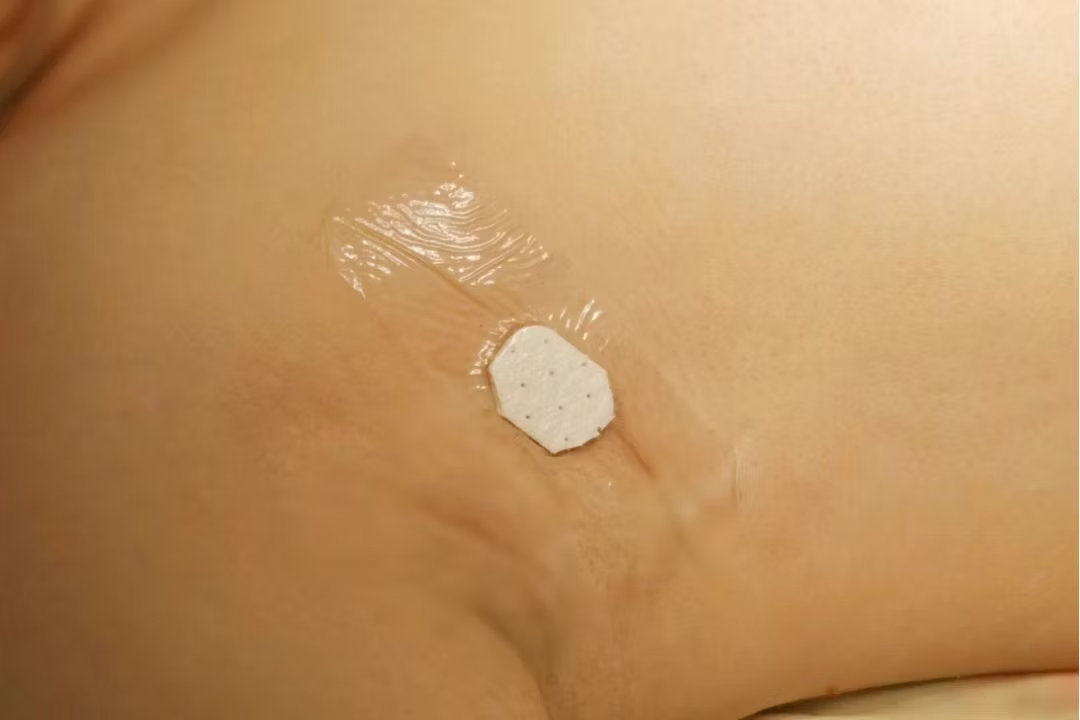
The incidence and severity of compensatory sweating following hyperhidrosis surgery are closely associated with surgical technique. When performed using standardized procedures, compensatory sweating is generally relatively infrequent and tends to be mild.
6. Lifestyle and Behavioral Measures
Lifestyle modifications (behavioral or supportive therapies) can also be helpful. Patients are advised to pay attention to diet, daily habits, and clothing choices to avoid exacerbating hyperhidrosis. These measures are usually recommended alongside other medical treatments.
A Note from ICWS
Although there is currently no cure for primary hyperhidrosis, treatment options have advanced significantly in recent years, providing patients with more precise, effective, and long-lasting relief.
As China’s first minimally invasive hyperhidrosis center, ICWS provides systematic, precise, and professional hyperhidrosis diagnosis and treatment. ICWS’s ultra-minimally invasive T4 Sympathectomy for hyperhidrosis has an effectiveness rate of 95% to 100%, with a relatively low incidence of compensatory sweating. After surgery, a drainage tube is generally not required, which significantly improves postoperative comfort and allows patients to be discharged on the same day as the procedure.
If conservative treatments fail to relieve your hyperhidrosis and the symptoms have significantly affected your quality of life, it is recommended to consider surgical intervention and to consult our specialist physicians for further evaluation.
.png)
.png)