

The chest wall serves as a critical barrier protecting vital organs such as the heart and lungs. Once affected by disease, it may impair appearance and quality of life and, in more severe cases, directly threaten cardiopulmonary function. Clinically, chest wall disorders encompass many types of conditions, including deformities, infections, tumors, and more.
Chest wall disorders are a global health concern that affects people of all ages. However, in many regions, these conditions have not received enough attention, which has slowed the development of effective treatments and limited the accumulation of clinical experience. Therefore, even in countries with well-developed healthcare systems, patients may still face insufficient diagnosis, delayed treatment, and suboptimal clinical outcomes.
The Structure of the Chest Wall
The chest wall is a composite structure composed of bony elements (such as the ribs, sternum, and thoracic vertebrae), soft tissues (including muscles, cartilage, and connective tissues), and the skin. When any of these parts develops an abnormality or undergoes pathological changes, the condition is generally called a chest wall disorder.
Therefore, chest wall disorders encompass a wide range of conditions, including deformities, infections, tumors, defects, and trauma.
As the world's largest center for the diagnosis and treatment of chest wall disorders, ICWS emphasizes early diagnosis and individualized treatment to prevent long-term complications. If you or your family have any related symptoms or concerns, please contact us to arrange a consultation.
The 4 Major Categories of Chest Wall Disorders
1. Chest Wall Deformities
Chest wall deformities may be congenital or acquired. They refer to a group of disorders characterized by abnormalities of the bony structures (including the sternum, ribs, and costal cartilages), which result in noticeable changes in the appearance of the chest wall.
- Pectus Excavatum: Also called “funnel chest,” it is characterized by a depression of the sternum, which gives the chest wall a funnel-shaped appearance.
- Pectus Carinatum: Also known as “pigeon chest, it is a condition characterized by the protrusion of the sternum and ribs in the anterior chest wall, causing the chest to stick out more than usual.
- Others: Many other chest wall deformities are named based on their morphological features, such as barrel chest, flat chest, and costal arch deformity.
Physical examination and imaging studies (such as X-rays and CT scans) are commonly used diagnostic methods.
Further reading: 6 Common Types of Chest Wall Deformities
Chest wall deformities often cause psychological distress, leading to anxiety, social withdrawal, and even depression. These emotional issues may, in turn, contribute to physical symptoms such as chest tightness or pain. Additionally, in severe cases, the markedly depressed chest wall may compress the heart and lungs, resulting in reduced exercise tolerance, palpitations, and recurrent respiratory infections.
Accordingly, different types of chest wall deformities may require targeted management options, including surgical procedures (such as the Nuss procedure, the minimally invasive Wang procedure, the Wenlin procedure, and the Wung procedure) and nonsurgical therapies (such as vacuum bell therapy for pectus excavatum and bracing for pectus carinatum).
2. Chest Wall Infection
Chest wall infection refers to infectious lesions involving the structures and tissues of the chest wall. The severity of the infection can vary, ranging from involvement limited to the skin surface to extension into the soft tissues or even the bony structures.
These infections are often caused by bacteria or other specific pathogens.
However, their specific etiologies are diverse. Common causes include trauma, postoperative complications, cryptic or primary infections (such as tuberculous chest wall infection), spread from adjacent structures, local tissue necrosis, osteomyelitis, radiation-induced injury, tumors, and immunosuppression.
Common symptoms may include fever, chest wall pain, headache, localized redness and swelling, and palpable chest wall masses (such as abscesses or edematous lesions).
Diagnostic evaluation varies depending on the clinical presentation and may involve physical examination, imaging studies (such as X-ray, CT, ultrasound, MRI, and 3D reconstruction), echocardiography, blood tests, and secretion cultures.
For mild infections, treatment primarily involves drainage and antibiotic therapy. Surgical debridement may be required when necessary.
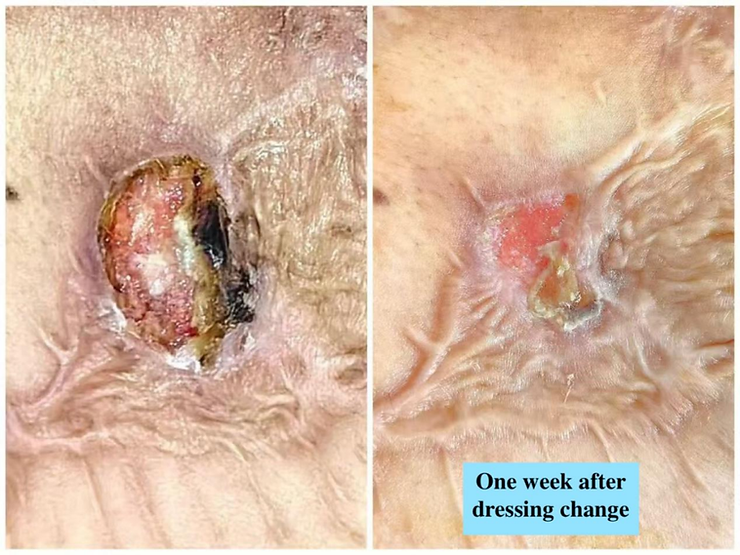
chest wall infection: before and after
3. Chest Wall Tumor

Chest wall tumor
Chest wall tumor refers to abnormal masses or neoplasms occurring in the tissues of the chest wall, including tumor of the bony structures, soft tissues, and skin.
Chest wall tumor can be classified based on its nature as benign or malignant. According to its origin, it may be primary or secondary (metastatic), with the latter commonly originating from malignancies such as breast cancer, lung cancer, thyroid cancer, esophageal cancer, or hematologic malignancies.
Most patients with early-stage chest wall tumor present without obvious symptoms. The onset and severity of symptoms are closely related to tumor size, growth rate, and pathological type. Typical manifestations include localized pain, tenderness, and swelling, which may be accompanied by pathological fractures or pleural effusion.
Diagnosis typically involves a combination of physical examination, imaging studies, and needle biopsy.
Surgery is the preferred treatment, involving the resection of the tumor along with surrounding tissues and chest wall reconstruction. Chemotherapy, radiotherapy, and integrative therapies combining traditional Chinese and Western medicine have some alleviating effects.
4. Other Conditions
In addition to the categories mentioned above, there are also special cases such as chest wall trauma and chest wall defects.
Chest wall reconstruction surgery is commonly performed in patients with extensive chest wall defects or trauma. Its primary goal is to restore the basic contour and structural stability of the chest wall to ensure normal physiological function.
Meanwhile, chest wall aesthetic surgery has gradually developed in response to increasingly diverse patient needs and advances in material technology. Such procedures address large chest wall scars, remove lesions affecting appearance, and restore the shape of muscles and breasts, thereby enhancing the aesthetic quality of the chest wall. This helps patients regain confidence and greatly improves their overall quality of life.

Chest wall defect
When to Seek Medical Care and Treatment Planning
Patients should consult a doctor immediately if they experience symptoms, such as chest pain, shortness of breath, unusual chest movement, outward bulging of the chest wall, swelling, or a mass in the chest wall. These symptoms may be indicative of chest wall deformity, trauma, infections, or tumors that have the potential to develop quickly without timely treatment. Early detection enables us to avoid life-threatening complications such as respiratory failure, chronic pain, or cancer spread.
For patients requiring surgical care, advanced surgical approaches are available at ICWS to restore both function and appearance. Contact the ICWS specialist team for a comprehensive assessment and evidence-based treatment options.
.png)
.png)