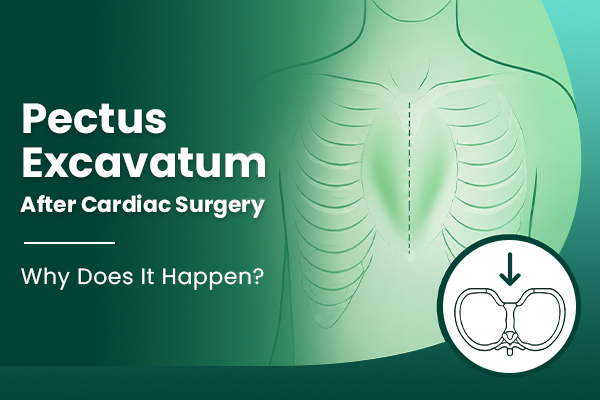

When you or your child is diagnosed with pectus excavatum, one of the most common and concerning questions is: Is pectus excavatum dangerous? In fact, the level of risk varies and is closely related to the specific type and severity of pectus excavatum. Some patients only exhibit cosmetic changes, while others may experience impaired cardiopulmonary function or even more serious complications. This article systematically analyzes the potential risks of pectus excavatum, helping you better understand its degree of harm and the significance of treatment.
Celebrities with Pectus Excavatum
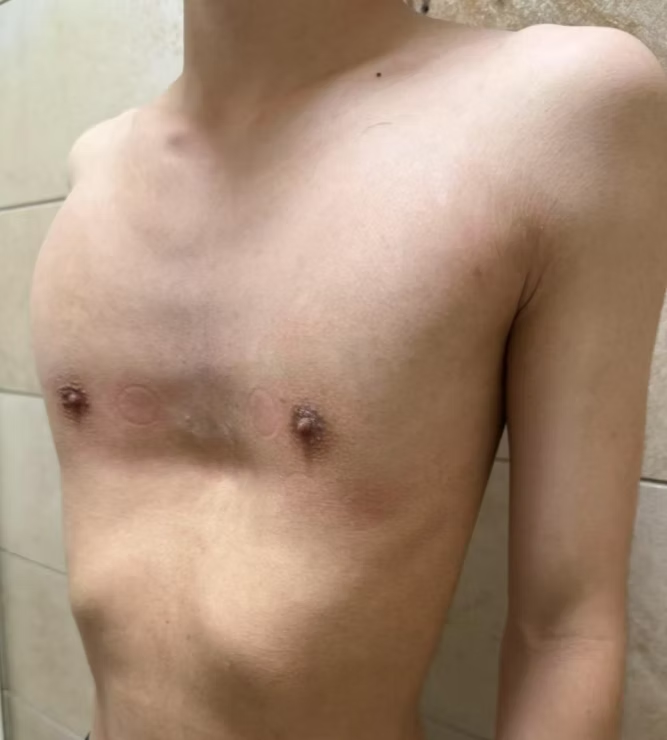
Pectus excavatum is far more prevalent than many realize, affecting individuals across diverse professions and public life. Statistically, how common is pectus excavatum?
Pectus excavatum, also known as funnel chest, is the most common chest wall deformity[1,2]. Its incidence varies across different studies. Reportedly, pectus excavatum accounts for 65% to 95% of all chest wall deformities, with an estimated prevalence of up to 1 in 300 births[2].
The presence of celebrities with pectus excavatum serves as a testament to the fact that many individuals live active lives with the condition. However, it also highlights that pectus excavatum is highly individualized. Notable figures who have been identified or discussed in public forums regarding their chest wall include:
1. Joaquin Phoenix: The Oscar-winning actor has a visible chest depression.
2. Cody Miller: An Olympic gold medalist swimmer who has been vocal about how pectus excavatum affected his lung capacity, but didn't stop his career.
3. Brendan Fraser: Known for his physically demanding roles.
4. Neil Patrick Harris: Noted for a mild form of the condition.
5. Sylvester Stallone: World-renowned for his roles in Rocky and Rambo, he is reported to have mild pectus excavatum.
6. Tom Holland: The young actor portraying Spider-Man, demonstrating agility despite mild pectus excavatum.
7. Charlie Puth: Pop sensation whose musical success transcends physical challenges.
8. Brandon Routh: Superman actor with visible pectus excavatum.
9. Mark Wahlberg: From musician to acclaimed actor.
10. Aaron Taylor-Johnson: Versatile action star in Marvel films.
From mild cosmetic effects to more pronounced symptoms, pectus excavatum manifests differently among affected individuals. Clinically, it can be classified into six major types to further assess its risks and treatment options.
Is Pectus Excavatum Dangerous? Risk Analysis by Type
The general shape of pectus excavatum shares common features, but significant differences exist among individuals. Based on individual morphological variations, pectus excavatum can be classified into the following distinct types:
1. Symmetrical Pectus Excavatum
2. Asymmetrical Pectus Excavatum
3. Extensive Pectus Excavatum
4. High-Positioned Pectus Excavatum
5. Grand Canyon-Type Pectus Excavatum
6. Pectus Excavatum with Acute-angle Deformity
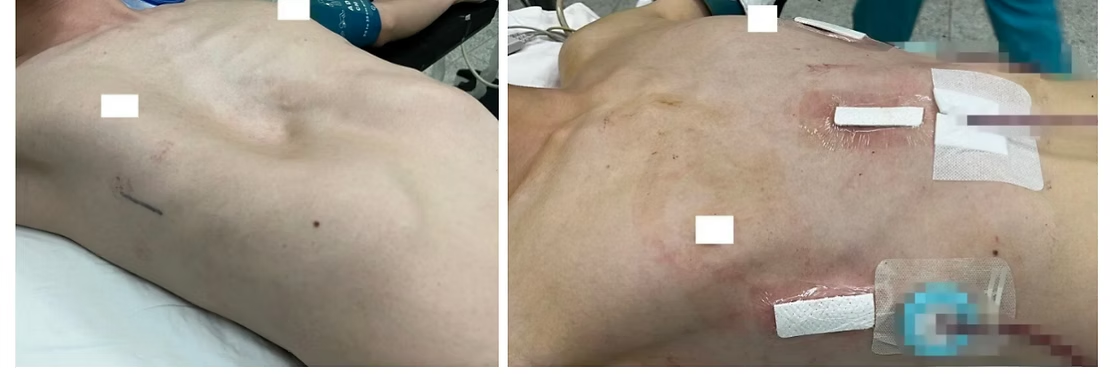
A Detailed Exploration of the Types of Pectus Excavatum: Six Major Types of Pectus Excavatum
Besides Symmetrical Pectus Excavatum, the other five types of pectus excavatum are relatively special forms. Among them, High-Positioned Pectus Excavatum and Pectus Excavatum with Acute-angle Deformity are more dangerous compared to other types.
-
In high-positioned pectus excavatum, the depression is located close to the entry and exit of the heart’s major vessels. If the depression is severe, it more easily affects cardiac function.
-
In pectus excavatum with acute-angle deformity, margins or the deepest part of the deformity form sharp angles that
Malignant Pectus Excavatum
Importantly, among all pectus excavatum cases that compress the heart and lungs, there exists the most dangerous and severe condition: when the anterior chest wall presses directly on the heart, and the heart cannot shift leftward due to certain reasons to alleviate the pressure, it forms “Malignant Pectus Excavatum.”
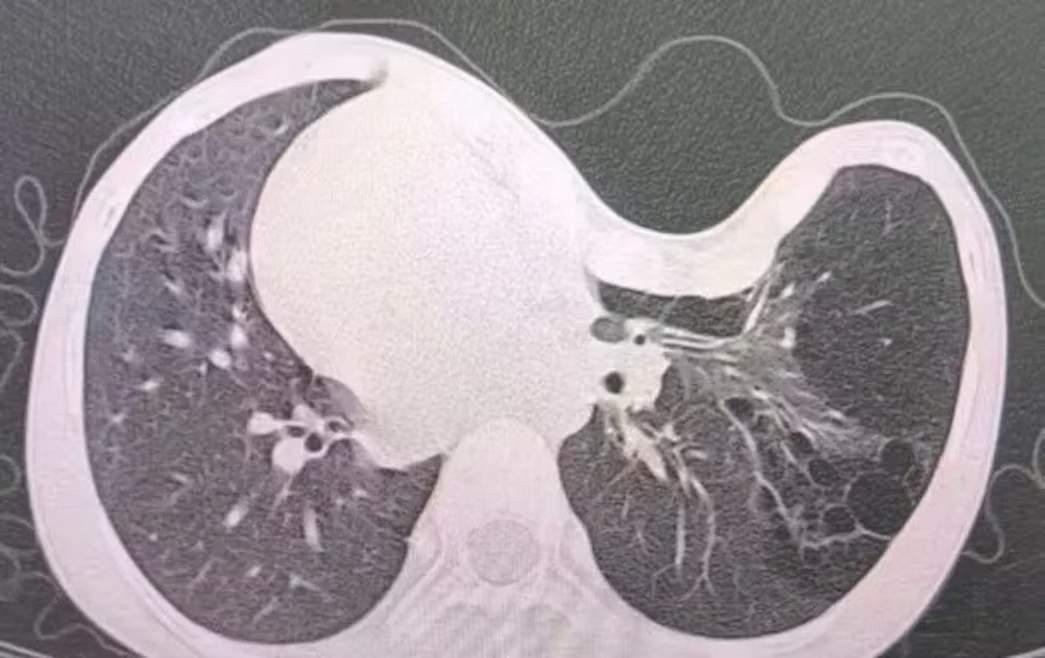
In addition to primary malignant pectus excavatum, malignant pectus excavatum most commonly develops secondary to cardiac surgery and is also prone to occur in recurrent pectus excavatum following open surgery. Due to severe adhesions, the heart is closely apposed to the depressed chest wall, causing direct compression of the heart by the depression and severely impairing cardiac function.
Malignant pectus excavatum: What is malignant pectus excavatum?
A Real surgical case of malignant pectus excavatum: Minimally invasive surgery for malignant pectus excavatum.
Common Symptoms of Pectus Excavatum and Their Impacts
(1) Physiological Effects
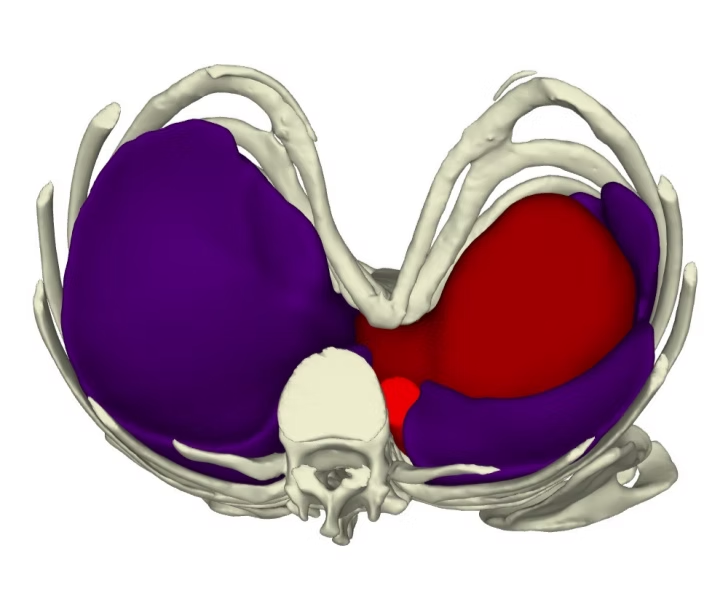
Mild pectus excavatum may present no symptoms. However, in severe cases, the sunken chest wall can compress the heart and lungs, causing symptoms such as palpitations, shortness of breath, and breathing difficulties. Pectus excavatum may also lead to scoliosis, which is more common in patients with severe deformities or long-standing conditions. In addition, pectus excavatum can affect other bodily functions, leading to symptoms such as indigestion, loss of appetite, delayed growth, and frequent upper respiratory infections.
(2) Psychological Effects
Due to the abnormal appearance of the chest wall, patients may become introverted and develop feelings of inferiority, which can lead to a series of psychological problems and affect their normal study, work, and daily life.
Can Pectus Excavatum Get Worse with Age?
The severity of pectus excavatum generally increases with age.
In early years, it may cause no significant problems. However, as the patient ages, particularly during the rapid growth phase of adolescence, the depth of the depression may increase and its area may expand, leading to more pronounced symptoms. Moreover, after adolescence, as the bones gradually calcify, the bony structures in the affected area also become increasingly rigid, significantly raising the risks and technical difficulties associated with surgical treatment.
When to See a Doctor?
If you or your family members experience discomfort due to pectus excavatum or suffer significant psychological distress because of its appearance, it is advisable to seek medical attention or consider surgery.
ICWS
For patients seeking advanced and safe treatment options, ICWS provides highly specialized and personalized surgical solutions. Relying on multiple innovative techniques, such as the Wang procedure and the Wung procedure, our experienced team of experts is dedicated to treating various complex and rare chest wall deformities for patients worldwide.
Our Surgical Cases:
- The Surgery for A 5-year-old Child with Severe Pectus Excavatum
-
Wang Procedure for An 11-Month-Old Child with Severe Pectus Excavatum
-
The Surgery for A 59-year-old Patient with Severe Pectus Excavatum
-
Surgery for A Patient Suffering Pectus Excavatum with Acute Angle Deformity
Please don’t hesitate to contact us for a complimentary consultation.
References:
[1] Sharma, G., & Carter, Y. M. (2023, July 17). Pectus excavatum. StatPearls - NCBI Bookshelf. https://www.ncbi.nlm.nih.gov/books/NBK430918/
[2] Małek, Ł., Lemańska, A., & Śpiewak, M. (2025). Pectus Excavatum—A frequent but often neglected entity in sports cardiology. Diagnostics, 15(23), 2956. https://doi.org/10.3390/diagnostics15232956
.png)
.png)