
Adolescence is often the stage when pectus excavatum and pectus carinatum become more visible, more symptomatic, and more emotionally difficult to ignore. For many teens, the concern goes beyond chest shape and may also involve exercise tolerance, body image, and self-confidence during a stage of life when identity and self-esteem are still developing.
Important Points:
Pectus excavatum and pectus carinatum are two common chest wall deformities. They may be present early in life, but they usually become more pronounced during the rapid growth phase of adolescence, making the teenage years a key period for evaluation and treatment planning.
For adolescents, this stage is especially important. A noticeable chest wall deformity may affect physical comfort, clothing choices, participation in sports, social confidence, and psychological health.
When patients and their families have a strong desire for surgery due to concerns about appearance, function, or psychological well-being, minimally invasive surgery may be considered for correction.
Pectus Excavatum
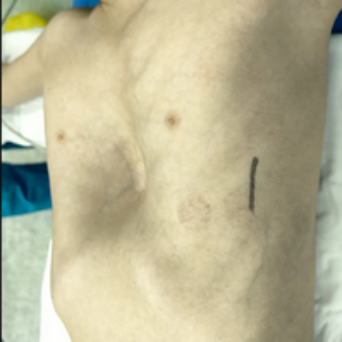
A 5-year-old child with severe pectus excavatum
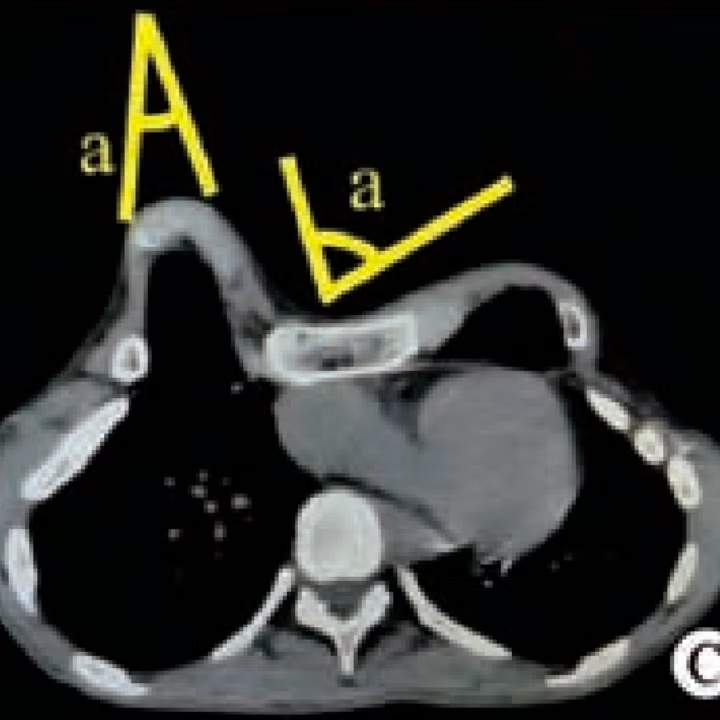
Pectus excavatum is a common chest wall deformity and currently one of the most well-established conditions treated in thoracic surgery. It is characterized by an inward depression of the sternum and adjacent costal cartilages, resulting in a concavity of the mid or lower sternum. Patients often describe it as “a sunken chest” or “a hollow in the chest.”
Some studies have shown that the incidence of pectus excavatum is approximately 1 in 400 live births, with a male-to-female ratio of about 5:1[1]. However, estimates vary across studies and diagnostic methods.
This chest wall deformity may be mild in early childhood but becomes more apparent during preadolescence or adolescence. Clinically, family members often first notice a deepening of the chest wall depression, worsening posture, or decreased exercise tolerance during the teenage years. As the depressed chest wall progressively compresses the heart and lungs, respiratory symptoms such as palpitations and shortness of breath may gradually develop.
Further Reading: Is Pectus Excavatum Dangerous?
Pectus Carinatum
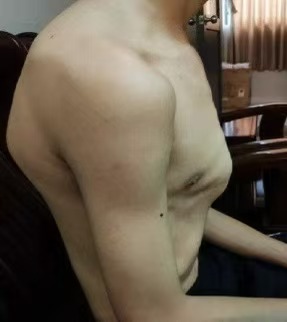
A 15-year-old adolescent with severe pectus carinatum
Pectus carinatum, also known as pigeon chest, is a relatively common anterior chest wall deformity characterized by the protrusion of the sternum and ribs.
It has been reported to occur in approximately 1 in 1,500 live births and is more common in males[1].
Similar to pectus excavatum, pectus carinatum often becomes more pronounced during the rapid growth of the chest wall in adolescence. The main concern is usually cosmetic, but in some cases, patients may experience physical discomfort, such as shortness of breath and easy fatigue.
Further Reading: Pectus Excavatum vs. Pectus Carinatum: Key Differences
Main Impacts of Chest Wall Deformities on Adolescents
The effects and risks of chest wall deformities, including pectus excavatum and pectus carinatum, can be broadly divided into physical health effects and mental health effects.
- Effects on Physical Health: Mild, Moderate, Severe
Not every teen with pectus excavatum or pectus carinatum has the same degree of physical impact. The impact can range from mild to moderate to severe, and treatment decisions should take into account symptoms, imaging findings, and the teen’s own concerns about appearance and function.
|
Severity |
Pectus Excavatum |
Pectus Carinatum |
|
Mild |
A visible dent in the chest, possible posture issues, and little or no effect on heart or lung function in many cases. |
In most cases, patients do not have obvious clinical symptoms. |
|
Moderate to Severe |
May compress the heart or lungs, causing symptoms such as palpitations, shortness of breath, and breathing difficulty. In addition, patients may also experience indigestion, delayed growth and development, and frequent upper respiratory infections. Meanwhile, pectus excavatum can also lead to scoliosis. |
In certain cases, patients may present with breathing difficulties and fatigue. Some patients may also develop upper respiratory infections and asthma. The psychological distress caused by the chest wall deformity may also lead to physical discomfort, such as chest tightness and chest pain. |
- Effects on Mental Health: Should Not Be Ignored
Adolescents and young adults with chest wall deformities commonly report impaired body image, reduced self-esteem, social avoidance, and decreased quality of life.
This issue is particularly prominent during adolescence, as the deformity often coincides with a critical stage of self-image development. Adolescents may avoid swimming, sports locker rooms, tight-fitting clothing, or situations where their chests are exposed. Some individuals may also adopt a slumped posture to conceal the chest wall abnormality.
One study using standardized preoperative interviews found that 40% of pectus excavatum patients remained preoccupied with their chest, 62.5% felt ashamed, and 25% believed the condition had a direct impact on self-image[2]. Another study reported that 26% of pectus excavatum patients had social dysfunction and 42% had learning difficulties[3]. A further study found that 43% of pectus excavatum patients may have social anxiety disorder[4].
When Surgery Is Usually Recommended?
For milder cases, non-surgical options may help improve symptoms and appearance, so they are usually tried first before surgery is considered.
For pectus excavatum, non-surgical treatment may include posture exercises, physical therapy, and, in some younger patients, an external suction device such as a vacuum bell. For pectus carinatum, bracing is the main non-surgical treatment and is usually tried first, especially in children and adolescents whose chest wall is still flexible and growing.
When the deformity becomes moderate to severe and clearly affects daily life, surgery is usually recommended by a doctor after evaluation. Surgery may also be considered when non-surgical treatment is not effective or when the patient and family strongly prefer surgical correction.
Common Pectus Excavatum Surgeries
Common surgical options for pectus excavatum include the Ravitch procedure, sternal flip procedure, Nuss procedure, Wang procedure, and Wung procedure.
The Ravitch procedure and the sternal flip procedure are both traditional open surgeries.
The Nuss procedure is a minimally invasive technique that uses a specially designed bar to support the depressed chest wall and correct the deformity.
The Wang procedure is a new-generation minimally invasive surgery developed by ICWS specifically for pectus excavatum. Its main advantage is that it corrects the deformity while helping avoid injury to the heart and lungs. It is less invasive, allows faster recovery after surgery, and does not restrict normal bone growth in children.
Further Reading: What are the differences between the Wang procedure and the Nuss procedure?
The Wung procedure is a modified version of the Nuss procedure that enhances surgical safety by improving bar placement and fixation techniques.
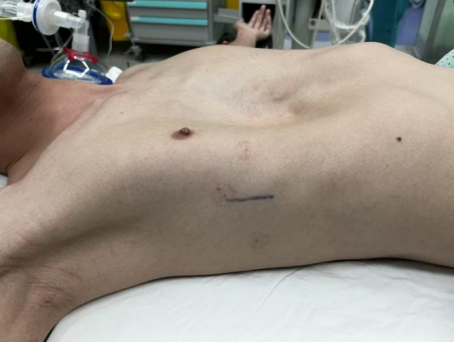
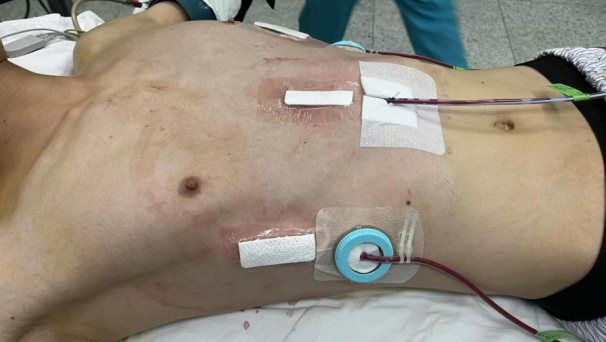 Preoperative and postoperative appearance of a patient with pectus excavatum treated with the Wung procedure + Wang procedure.
Common Pectus Carinatum Surgeries
Surgical options for pectus carinatum also include both open surgery and minimally invasive surgery.
Common minimally invasive procedures include the Abramson procedure and the Wenlin procedure.
The Abramson procedure remains a traditional minimally invasive surgical option.
The Wenlin procedure is a further-developed minimally invasive technique that combines multiple innovative surgical methods and concepts, such as the “Wang Technique” for bar stabilization and the “Pre-shaping” concept, in which the protruding bony structures are released and reshaped before using bars for contouring. It aims to make the correction safer, simpler, and less traumatic.
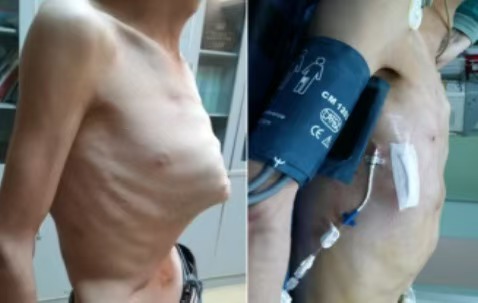
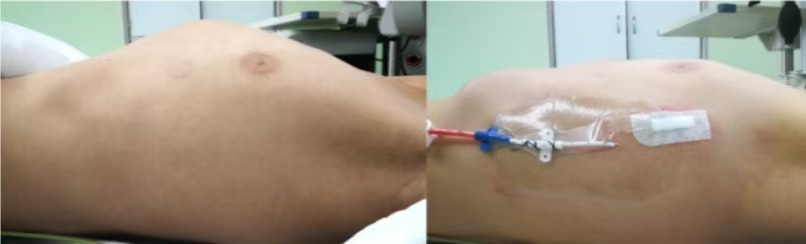
Preoperative and postoperative appearance of patients with pectus carinatum treated with the Wenlin procedure
ICWS: Advanced Chest Wall Treatment
Founded by Dr. Wenlin Wang and his team, ICWS has long been dedicated to treating chest wall deformities and related conditions. ICWS has developed a number of innovative procedures designed to be less invasive and offer advantages in safety, recovery, and cosmetic outcomes compared with traditional approaches, such as the standard Nuss procedure. These procedures, including the Wang procedure, Wung procedure, and Wenlin procedure, all emphasize patient safety, minimally invasive techniques, and aesthetic outcomes.
If you or your child is troubled by a chest wall deformity, please feel free to contact us to make an appointment.
References:
[1]Kılıç, F. E., Küçükkelepçe, O., Varan, C., Tanrıverdi, H., & Bakırhan, F. (2024). Exploring chest wall deformities in childhood and adolescence: insights from a case-control study. BMC pediatrics, 24(1), 700. https://doi.org/10.1186/s12887-024-05199-8
[2]Morshuis, W. J., Mulder, H., Wapperom, G., Folgering, H. T., Assman, M., Cox, A. L., van Lier, H. J., Vincent, J. G., & Lacquet, L. K. (1992). Pectus excavatum. A clinical study with long-term postoperative follow-up. European journal of cardio-thoracic surgery: official journal of the European Association for Cardio-thoracic Surgery, 6(6), 318–329. https://doi.org/10.1016/1010-7940(92)90149-r
[3]Sutyak, K. M., Hebballi, N. B., Bidart, Y., Joly, J. M., Broussard, M., Christensen, H., Mendenhall, J., Jayarajan, N., Anderson, I., Young, Y., Taylor, L., Little, D., & Tsao, K. (2025). Is it time to expand the surgical criteria? The psychosocial impact of pectus excavatum in pediatrics. Surgery, 185, 109546. https://doi.org/10.1016/j.surg.2025.109546
[4]Matsuda, K., Fujisawa, D., Masai, K., Miyazaki, N., Suzuki, S., Okubo, Y., Kaseda, K., Asakura, K., Hishida, T., & Asamura, H. (2024). Quality of life, psychological states, and personality traits in patients with pectus excavatum. JTCVS open, 19, 355–369. https://doi.org/10.1016/j.xjon.2024.03.013
.png)
.png)