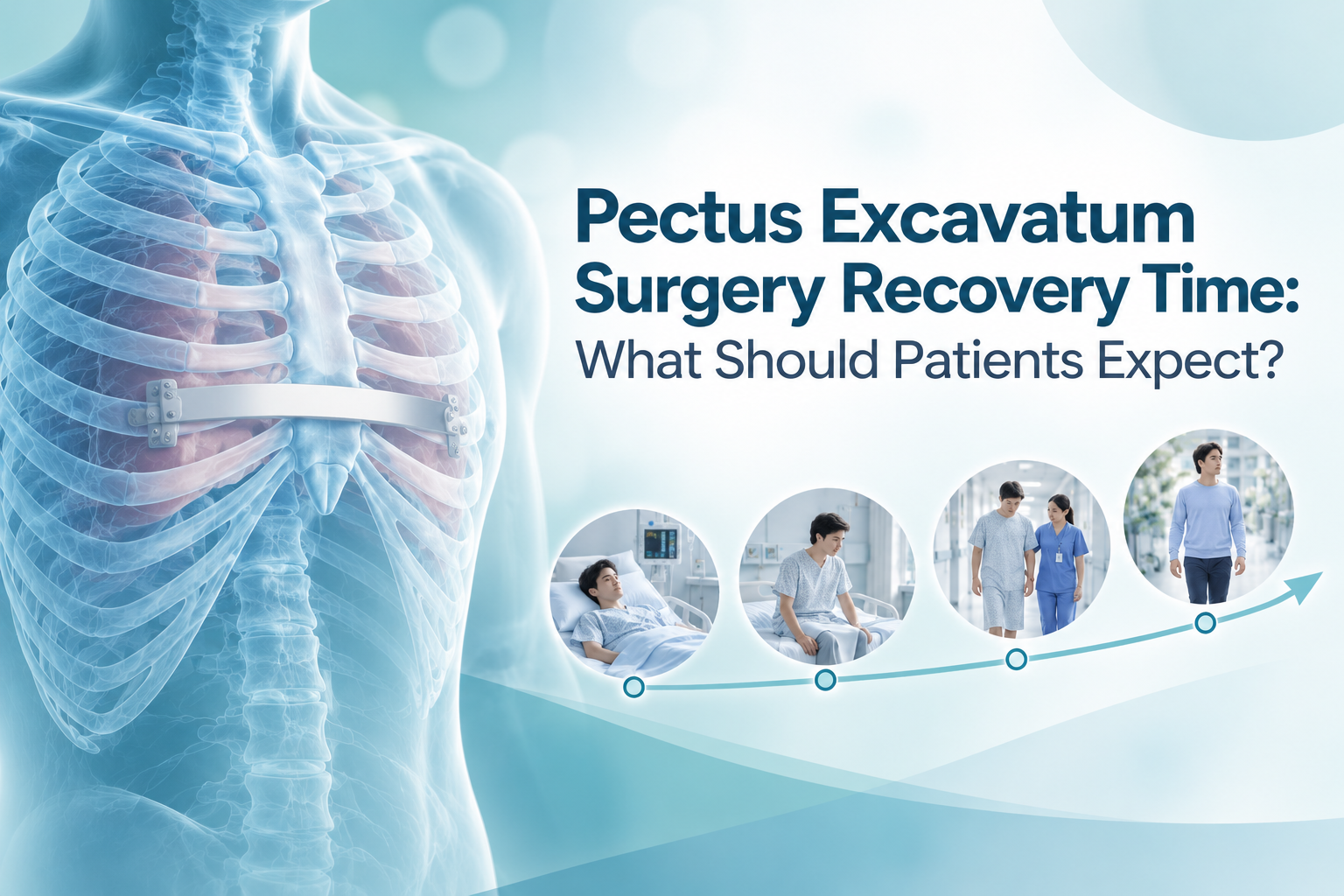
Recovery after pectus excavatum surgery is gradual, with patients progressing through each stage at their own pace. Pectus excavatum surgery recovery time varies by procedure, age, deformity complexity, and individual healing. Understanding these factors helps patients prepare for the hospital stay, manage recovery at home, and plan their return to normal life.
How Do Procedures Affect Pectus Excavatum Surgery Recovery?
The extent of tissue dissection, bar position, and fixation method can influence early pain, mobility, and postoperative care. The table below compares four surgical approaches to pectus excavatum and their implications for recovery.
| Procedure | Surgical approach and fixation | Recovery and potential risks |
| Ravitch procedure | An open procedure involving resection of abnormal costal cartilage and repositioning of the sternum, with support to maintain correction. | The larger incision and more extensive tissue dissection can result in greater surgical trauma, more postoperative pain, and a longer recovery. |
| Nuss procedure | Bars are placed behind the sternum and rotated to push the depression outward before being secured to the ribs and costal cartilage. | Despite the small incisions, chest wall reshaping can cause substantial pain in the early postoperative period.1 Bar placement carries risks of heart and lung injury, while rigid fixation can restrict chest wall growth and limit the procedure’s suitability for very young children. |
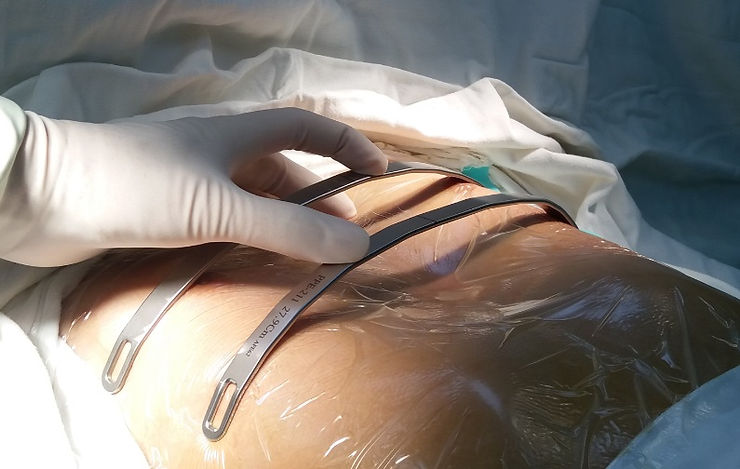
| Wang procedure | A bar is placed on the surface of the concave bony chest wall. Steel wires lift the depressed sternum and adjacent costal cartilage, with the bar secured at the center. | Avoids heart and lung injury from intrathoracic bar placement. Surface placement and central fixation allow normal chest wall growth. The procedure may also be an option for young children, including those under 5. |
| Wung procedure | Bars are guided into the chest through small incisions on either side of the chest wall, then rotated to correct the depression, and secured to the ribs with steel wires. | The procedure uses small incisions, typically no longer than 2 cm, and is designed to reduce the risk of cardiac injury. |
Learn More: The differences between the Wung procedure and the Nuss procedure
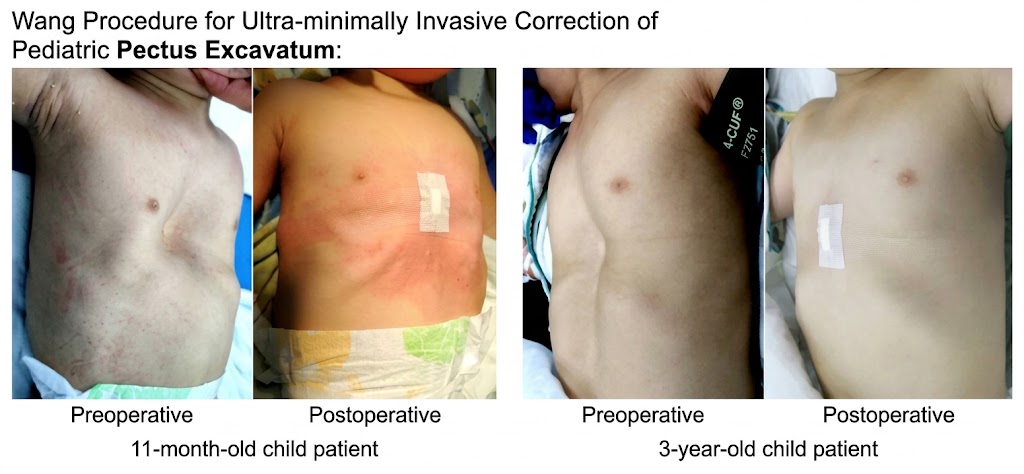
Ultra-minimally invasive Wang procedure for pectus excavatum in young children
Relevant case: Wang Procedure for an 11-Month-Old Child with Severe Pectus Excavatum

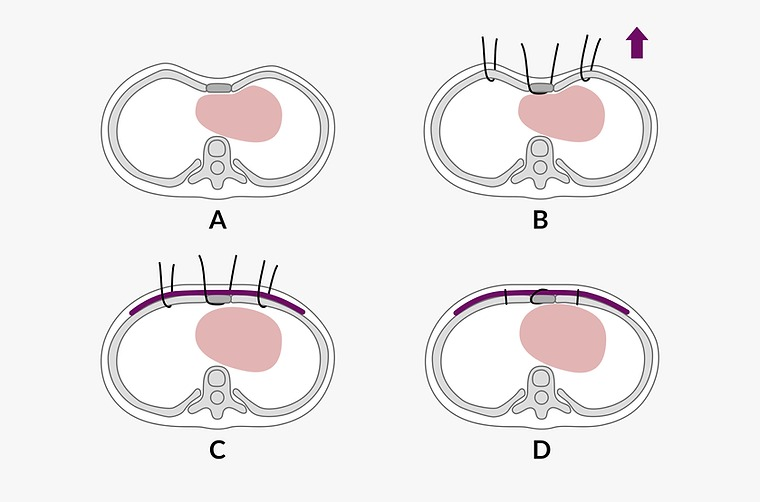
Surgical technique illustration of the Wang procedure
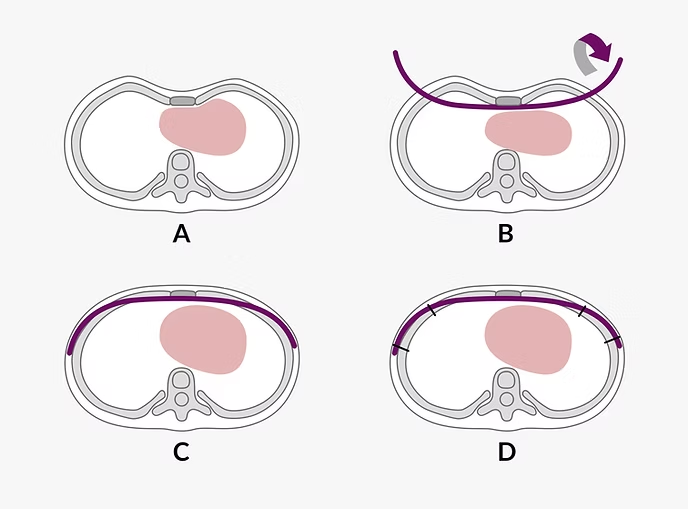 Surgical technique illustration of the Wung procedure
Developed by ICWS, the Wang procedure and Wung procedure are minimally invasive surgeries for pectus excavatum designed to reduce surgical trauma and shorten recovery time. After either procedure, patients recover in the hospital initially while their bodies adjust to the corrected chest wall.
What Happens in the First Few Days After Pectus Excavatum Surgery?
Most patients treated at ICWS stay in the hospital for about seven days, receiving pain relief, wound care, and help with movement as they gradually regain independence.
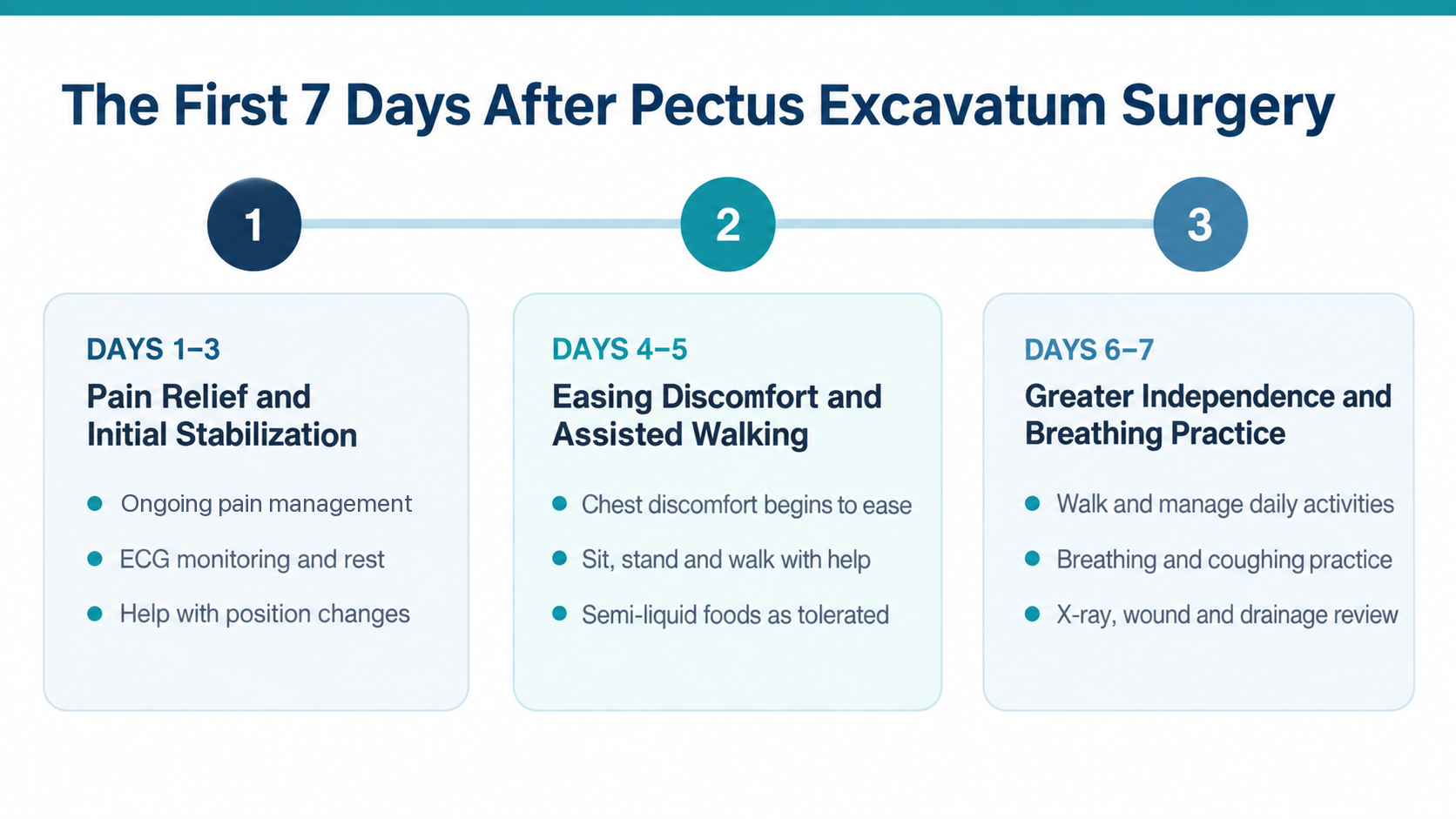
Days 1–3: Pain Relief and Initial Stabilization
Pain at the surgical site and a feeling of chest pressure or tightness are common in the early days. Breathing, coughing, and swallowing may be uncomfortable, and sitting up or getting out of bed often requires assistance.
- Monitoring and rest: ECG monitoring is used to track heart activity during the initial stabilization period. Patients rest in bed and receive assistance when changing position.
- Treatment and comfort: Care includes ongoing pain management, with oxygen therapy, nutritional support, constipation relief, and bleeding control provided as clinically indicated.
Pain control helps relieve discomfort and makes breathing and coughing easier. If pain makes it difficult to breathe or cough, tell your healthcare team so they can assess the situation and provide appropriate care.
Days 4–5: Easing Discomfort and Assisted Walking
Chest pressure and pain generally begin to ease, and most patients can get out of bed and walk within three to four days. ECG monitoring can be discontinued once the patient’s condition is stable.
- Sitting up and Walking: Raising the head of the bed helps patients move into a semi-upright position. With assistance, they can stand and walk to the bathroom.
- Eating: Patients can begin eating semi-liquid foods as tolerated. Porridge and soft, well-cooked noodles are good choices because they are easy to digest.
Days 6–7: Greater Independence and Breathing Practice
Patients work toward getting out of bed, walking on level ground, using stairs with assistance, eating meals, and using the bathroom more independently.
- Breathing practice: Medical staff guide patients through breathing and coughing exercises, including balloon-blowing exercises when prescribed.
- Wound review: Chest X-rays, dressing changes, and drainage checks help assess recovery. Drainage tubes are removed when the drainage volume and examination results allow. Once drainage tubes are removed, patients may shower with waterproof dressings in place. The waterproof dressings should then be replaced with breathable gauze dressings.
What Should Patients Expect During the First Month?
Most ICWS patients can resume basic activities around 10 days after pectus excavatum surgery. During the first month after surgery, gradually increasing daily activity and caring for healing incisions remain the priorities.
Rebuild Daily Activities and Support Healing
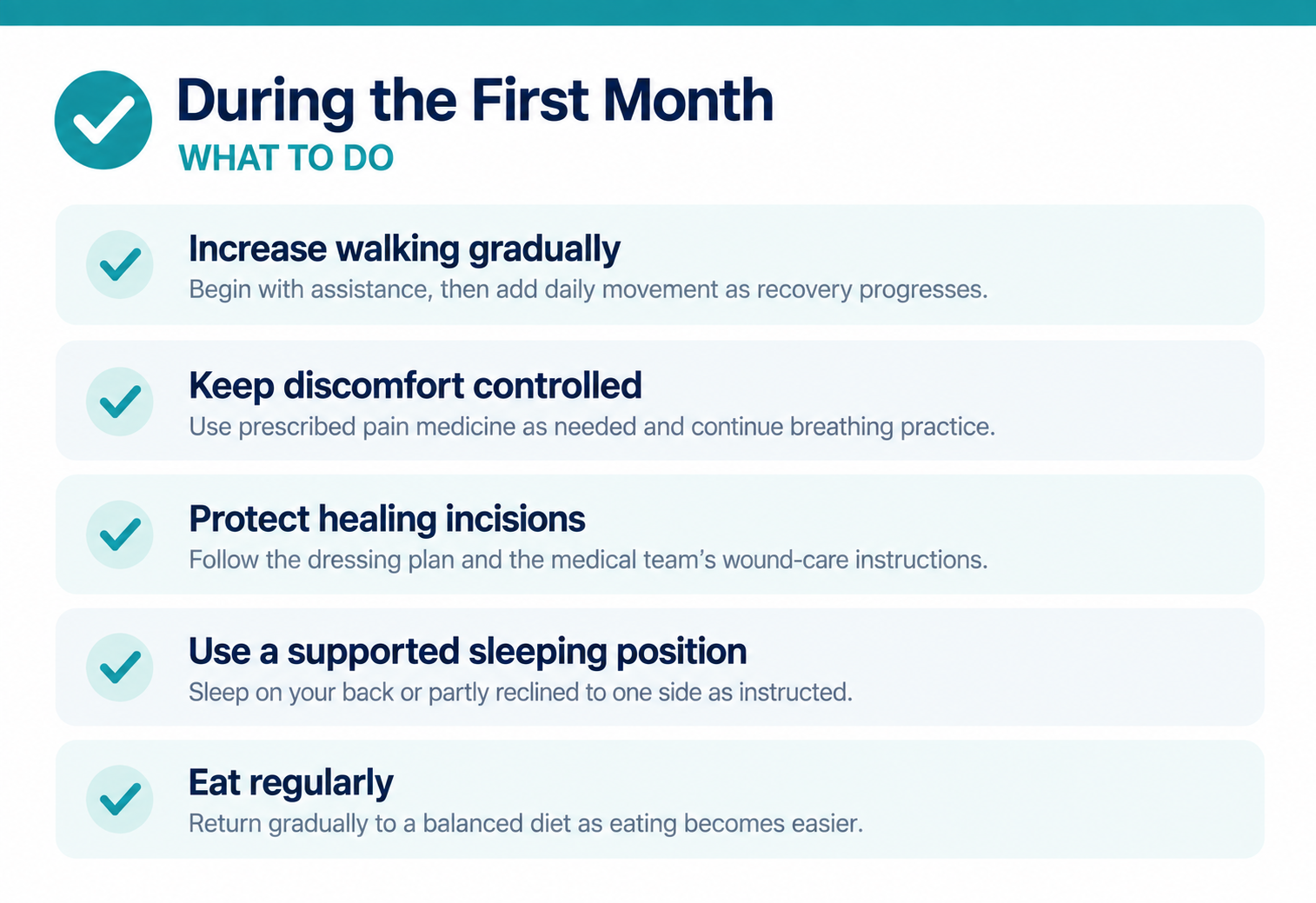
- Move with help, then increase walking. Practice getting up, lying down, and performing daily activities with help from family members. Keep your shoulders level and your back naturally upright instead of hunching over to avoid pain.
- Manage pain and discomfort. Chest pressure or restriction and intermittent shoulder or back pain can persist during the first month. Continue prescribed pain medication as needed, and keep practicing the breathing exercises taught in the hospital.
- Protect healing incisions. Follow the recommended wound care and dressing instructions. If removable stitches were used, they are usually removed around two to three weeks after surgery.
- Choose a supported sleeping position. Sleep on your back or on your side in a semi-reclined position, adjusting as needed to avoid putting pressure on the incisions.
- Eat regularly. Adequate nutrition supports wound healing and helps restore strength. Gradually return to a balanced diet as eating becomes easier.
Protect Your Chest While Staying Active
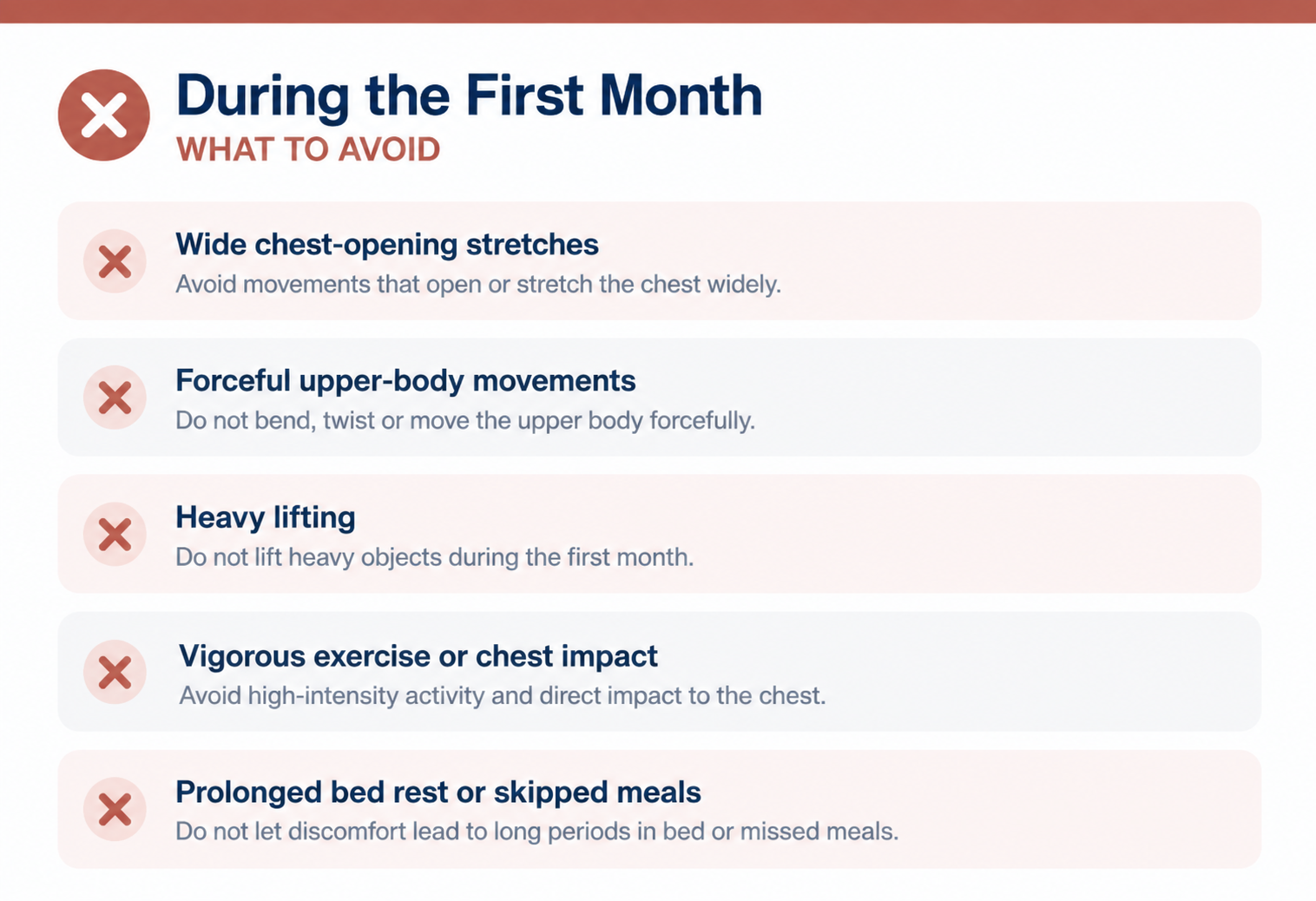
- Avoid wide chest-opening stretches, forceful upper-body movements, bending, twisting, and lifting heavy objects. Continue the breathing exercises despite these activity restrictions.
- Avoid strenuous exercise and activities that could result in a blow to the chest during the early stages of recovery.
- Avoid prolonged bed rest or skipping meals because of discomfort. Prolonged inactivity and poor intake can contribute to malnutrition, poor wound healing, pneumonia, and fluid around the lungs (pleural effusion).
Activity and care should be adjusted based on wound healing and your surgeon’s advice. Contact medical staff if pain worsens or is not relieved by prescribed medication.
When Can Patients Return to Work, Exercise and Sports?
| Milestone | Usual timing | Activity guidance |
| Return to work or school | Around 1 month | Resume classes or work that does not involve heavy physical labor. |
| Begin light exercise | Within the first 3 months | Start light jogging or walking on easy trails, as advised by your surgeon. Increase intensity gradually. |
| Broaden exercise | From around 3 months onward | Expand activity as chest wall healing progresses. Avoid contact sports such as football and basketball until bar removal, and protect your chest from falls or direct impact. |
| Pectus excavatum bar removal | Around 2–3 years | Bars support the corrected chest wall while it stabilizes. Removal is planned following assessment of chest wall stability and healing.2 |
Note: Stop activity and seek medical advice for chest pain, sudden tightness, or shortness of breath. Persistent fever above 38.5°C (101.3°F) also requires prompt assessment.

A gradual return to activity helps patients regain strength without compromising the correction.
Learn about pectus excavatum treatment and common postoperative questions.
How Does ICWS Support Recovery After Surgery?
The Institute of Chest Wall Surgery (ICWS) supports recovery at each stage after pectus excavatum surgery through pain management, wound care, activity guidance, and personalized rehabilitation. Early pain can be pronounced in adolescents and adults with less flexible chest walls, so a multimodal pain management protocol is central to this care:
- During surgery: Intercostal nerve blocks reduce the transmission of pain signals.
- After surgery: A patient-controlled analgesia (PCA) pump delivers pain medication, supplemented by scheduled intravenous medication.
- Rehabilitation support: Specialists tailor physiotherapy to each patient, using techniques such as acupuncture, therapeutic massage, electrical stimulation, and ultrasound therapy.
With experience from more than 10,000 chest wall surgeries, ICWS integrates surgical treatment with postoperative support suited to each patient’s needs. If you are considering pectus excavatum treatment, discuss your options with our surgeons. We can help you understand the recommended procedure and prepare for recovery with an individualized care plan.
References
1. Graves CE, Moyer J, Zobel MJ, et al. Intraoperative intercostal nerve cryoablation during the Nuss procedure reduces length of stay and opioid requirement: A randomized clinical trial. Journal of Pediatric Surgery. 2019;54(11):2250–2256.
2. Keong DE, Tzeng IS, Htut N, et al. Impact of delayed removal of pectus bar on outcomes following Nuss repair: a retrospective analysis. Journal of Cardiothoracic Surgery. 2024;19:160.