
Some chest wall deformities are relatively unique and exhibit fixed, well-defined morphological characteristics. They differ not only from common complex chest wall deformities, but also from single deformities such as pectus excavatum and pectus carinatum. In past clinical practice, many patients were misdiagnosed with other common deformities and thus received inappropriate surgical treatments, leading to surgical failure. To raise awareness of these deformities and to more clearly distinguish and define their diagnostic and treatment methods, Dr. Wenlin Wang conducted a detailed classification and naming of them.
Below is a concise summary of five commonly misdiagnosed chest wall deformities and their surgical treatment methods:
1. Grooved Chest
(previously considered a type of Pectus Excavatum)
Grooved Chest is a special and relatively rare concave deformity that was once regarded as a form of Pectus Excavatum, as both conditions involve a depression in the anterior chest wall. However, Grooved Chest has distinct characteristics that differentiate it from pectus excavatum:
-
In Pectus Excavatum, the depression is usually located near the center of the anterior chest wall and always involves the sternum, with edges that are relatively higher than the depressed area.
-
Grooved Chest is characterized by a horizontal, groove-like depression in the lower anterior chest wall. The indentation is relatively shallow, and there is no significant height difference between the bottom and the edges.
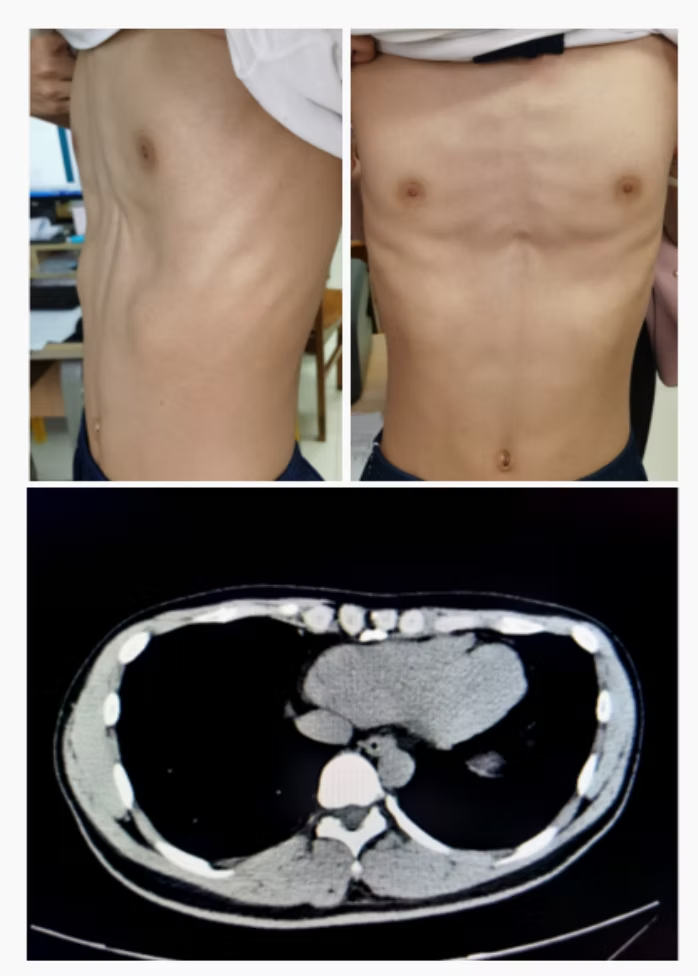
Surgical treatment of Grooved Chest:
In patients with Grooved Chest, both sides of the chest wall cannot provide sufficiently high fulcrums (support points) for the Nuss procedure, making the standard Nuss technique unsuitable. The ideal surgical options are the Wang procedure or the Wung procedure.
- The Wang procedure, unlike the traditional Nuss procedure, operates based on unique surgical principles that are not restricted by support points, allowing effective correction of the Grooved Chest. This surgical technique was first developed by Dr. Wenlin Wang in 2018 and has since been successfully applied in more than 500 patients with chest wall deformities, achieving excellent corrective outcomes.
- The Wung procedure is a surgical method refined from the standard Nuss procedure and is applicable for various concave chest wall deformities. In correcting Grooved Chest, it requires the use of special materials and operating techniques to artificially create fulcrums.
Explore More:
2. Wenlin Chest
(commonly misdiagnosed as Pectus Carinatum in the past)
This malformation is a rare and special type of chest wall deformity. Due to its unique features, Dr. Wenlin Wang named it “Wenlin Chest”. It is also referred to by many doctors as “Pectus Arcuatum.”
Due to its features overlapping with more common chest wall deformities (such as Pectus Carinatum, Pectus Excavatum, or a combined variant), this condition is often misdiagnosed.
-
The characteristic of Pectus Carinatum is the protrusion of the sternum and ribs on the anterior chest wall. These protrusions may appear in various areas of the anterior chest wall, with different sizes and degrees of prominence.
-
The Wenlin Chest, on the other hand, is characterized by an overall thickening of the sternum, forming an “S”-shaped profile when viewed from the side. The most prominent protrusion appears at the sternal angle in the middle of the chest wall, where the costal cartilages and ribs on both sides also bulge outward, creating large symmetrical protrusions on the upper chest wall. The edges of the protrusions are arc-shaped and droop downward, while the central chest wall appears sunken. The depression is mostly a relative one, with a significant height difference from the bulges above, yet it does not cause substantive compression on the heart and lungs.
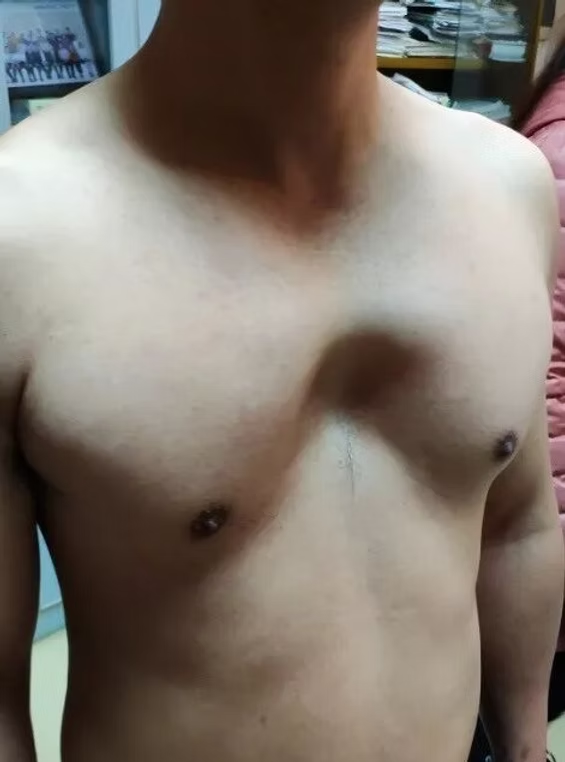
Wenlin Chest
Surgical treatment of Wenlin Chest:
Since Wenlin Chest presents with both protrusion and depression, it cannot be corrected using a single surgical method designed for either Pectus Carinatum or Pectus Excavatum. A combined approach using the Wenlin procedure plus the Wang procedure can be adopted (the former corrects the protrusion, while the latter corrects the depression).
-
The Wenlin procedure integrates multiple innovative surgical techniques and concepts, such as the “Wang Technique” for securing the bars and the “Pre-shaping” concept, in which the protruding bony structures are first released and reshaped before using metal bars for correction. This procedure is also an innovative surgical technique pioneered by Dr. Wenlin Wang specifically for the correction of pectus carinatum.
Explore More:
3. Flat Pectus Carinatum
(often misdiagnosed as extensive Pectus Carinatum)
-
The primary feature of Flat Pectus Carinatum is a prominent protrusion of the anterior chest wall, while at the same time, there is a localized vertical groove-like depression in the central area.
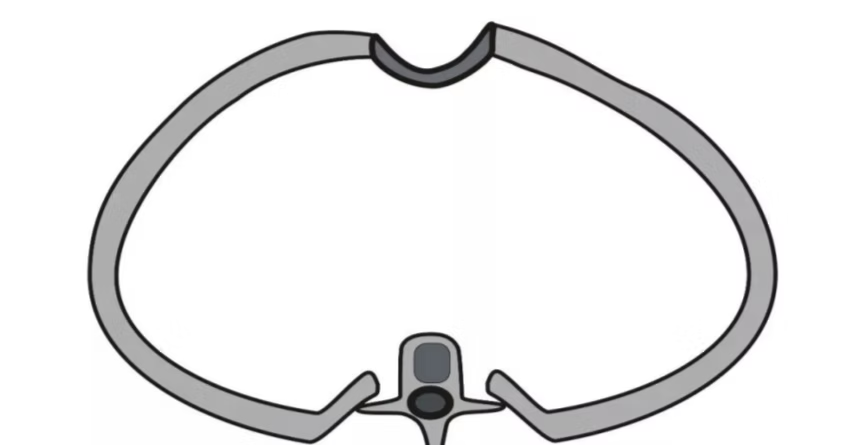
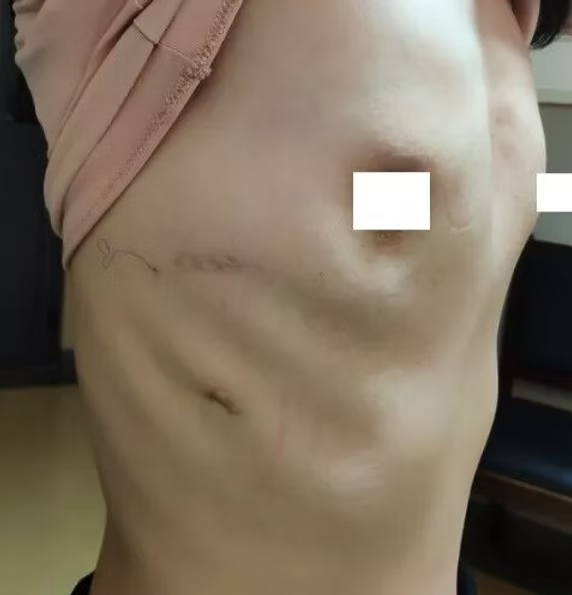 Flat Pectus Carinatum
 Surgical treatment of Flat Pectus Carinatum:
Because Flat Pectus Carinatum also presents with both convex and concave deformities, a combined surgical strategy can be adopted. Using a single steel bar, the Wenlin procedure (to correct the overall protrusion) and the Wang procedure (to correct the localized depression) can be performed simultaneously in a single operation, thereby achieving synchronous correction of this complex deformity.
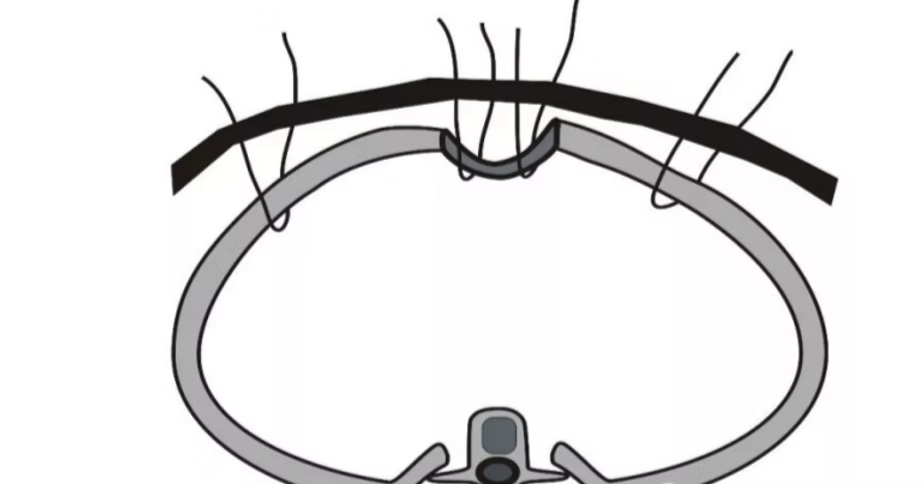
Successful Case:
4. Saddle Chest
(a deformity with limited research)
Saddle Chest is a relatively rare chest wall deformity with limited current research. Many doctors lack clinical experience in its diagnosis and treatment, leading to misdiagnosis and failed corrective surgeries.
-
The primary feature of Saddle Chest is symmetrical depressions on both sides of the lower chest wall. These two depressions are not connected but are separated by the normal-height chest wall in the center. The overall appearance resembles a saddle, hence it was named “Saddle Chest” by Dr. Wenlin Wang.
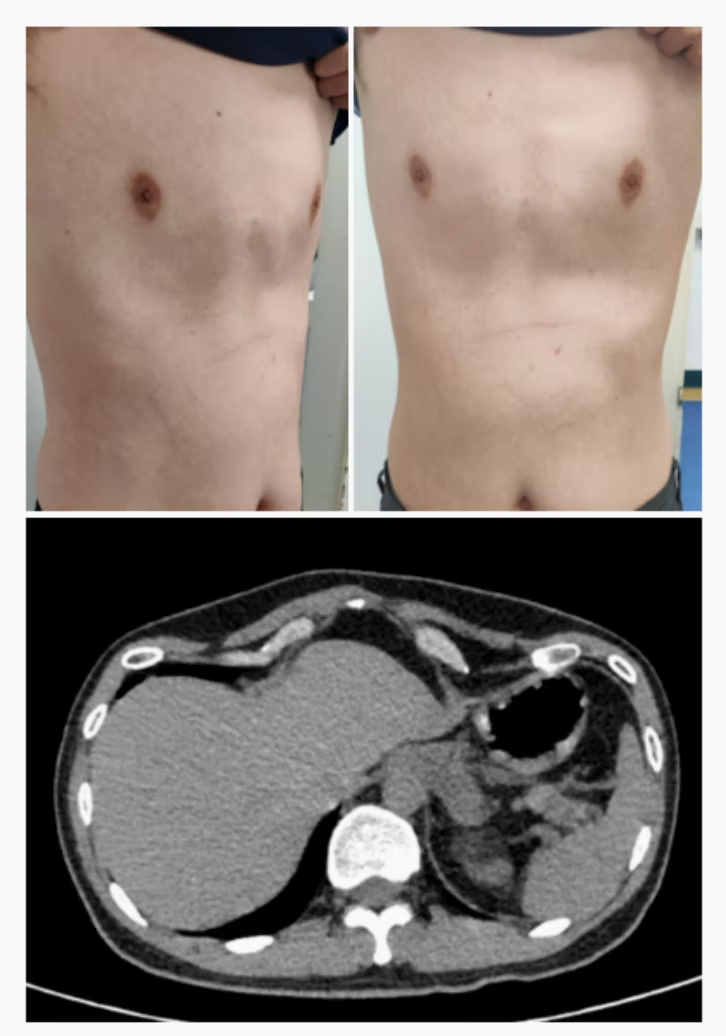
Surgical Treatment of Saddle Chest:
Wang procedure (notably, it can use a single steel bar to simultaneously perform two Wang procedures targeting the bilateral depressions).
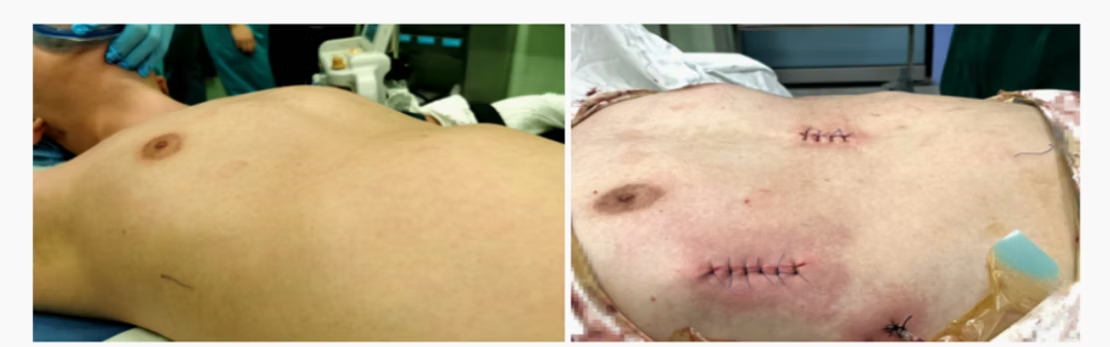
5. Depression of Lateral Chest Wall
(a concave deformity that affects only the ribs )
Lateral chest wall depression is also a type of concave deformity, but it clearly lacks the typical features of Pectus Excavatum, making it difficult to treat with conventional surgical methods designed for Pectus Excavatum (such as the Nuss procedure).
-
The depression in Pectus Excavatum is located near the center of the anterior chest wall and involves the sternum.
-
In Depression of Lateral Chest Wall, the depression is entirely located on one side of the chest wall and affects only the ribs, while the sternum remains completely normal.
Surgical treatment of Depression of Lateral Chest Wall:
The Modified Wang procedure can achieve excellent corrective results. Unlike the standard Wang procedure, the steel bar is placed perpendicular to the ribs during surgery; however, it retains the core operating principles of the standard procedure, making the surgery minimally invasive, simple, and safe.
Technical Specifications and Treatment Comparison
Understanding the nuances between these types of chest wall deformities is essential for both medical professionals and patients. The following table highlights the specific technical requirements for successful correction:
|
Deformity Type |
Key distinctions from Common Chest Wall Deformities |
Common Misdiagnosis |
Corrective Technique |
|
Grooved Chest |
Horizontal, groove-like depression in the lower anterior chest wall |
Pectus Excavatum |
Wang procedure / Wung procedure |
|
Wenlin Chest |
Overall thickening of the sternum, which appears as an “S” shape when viewed from the side |
More common chest wall deformities (e.g., Pectus Carinatum, Pectus Excavatum, or a combined variant) |
Wenlin procedure + Wang procedure |
|
Flat Pectus Carinatum |
An overall protrusion of the anterior chest wall, accompanied by a localized vertical groove-like depression in the center |
Pectus Carinatum |
Combined Surgery (Wenlin procedure + Wang procedure) |
|
Saddle Chest |
Symmetrical depressions on both sides of the lower chest wall, with normal central region |
_ |
Wang Procedure |
|
Depression of Lateral Chest Wall |
The depression is entirely located on one side of the chest wall and affects only the ribs |
Pectus Excavatum |
Modified Wang procedure |
Contact ICWS
Chest wall deformities come in many types, and some special deformities are often misdiagnosed as more common Pectus Excavatum or Pectus Carinatum, leading to suboptimal results with traditional surgical approaches. To address these special deformities, Dr. Wenlin Wang and the ICWS team have developed or refined innovative minimally invasive procedures such as the Wang procedure, the Wung procedure, and the Wenlin procedure, enabling precise correction of concave, convex, and complex deformities.
Do you or a loved one have a chest wall deformity that hasn’t responded to traditional treatment? Contact ICWS today to consult with our experienced and specialized chest wall correction experts.
.png)
.png)