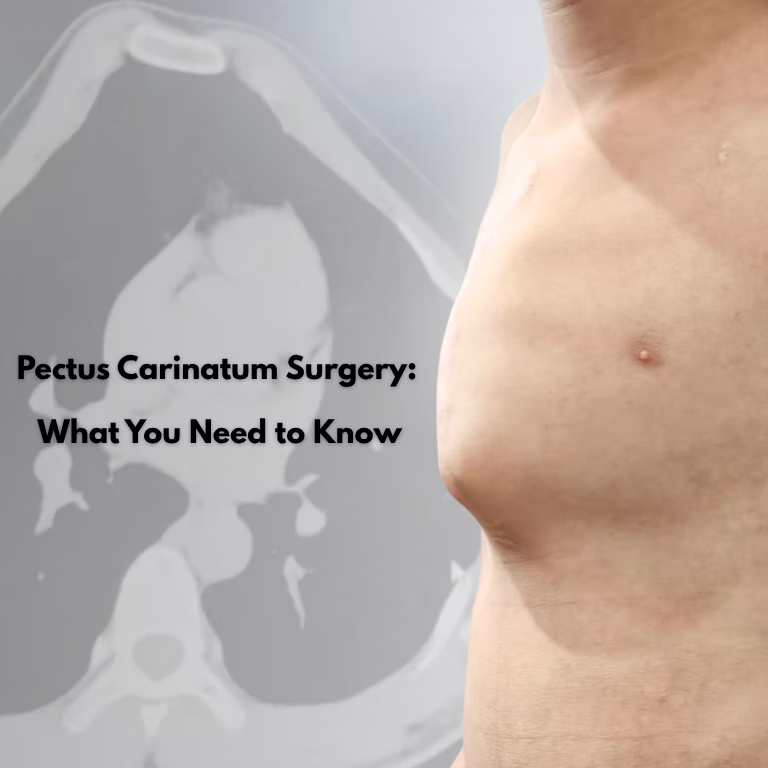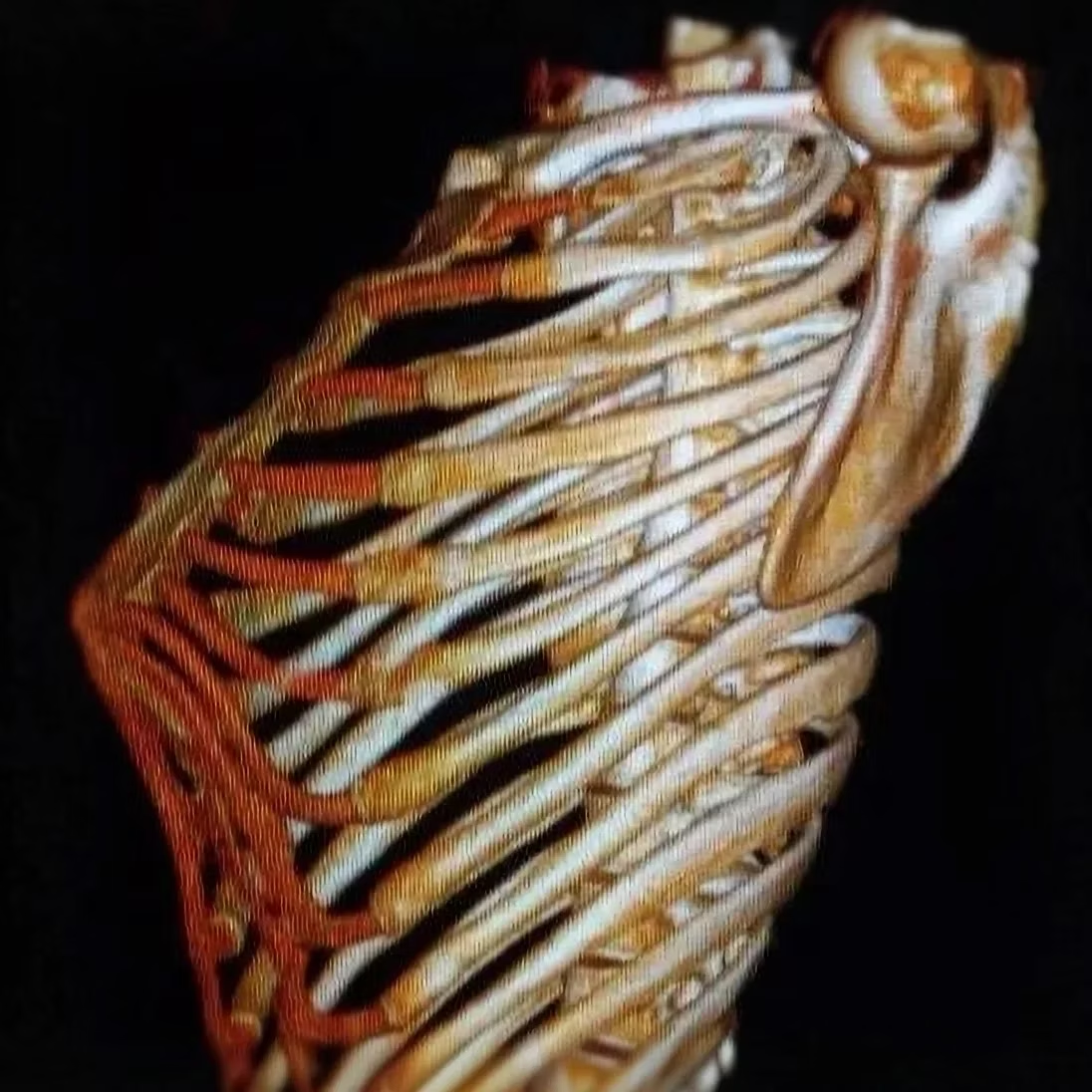

Pectus carinatum is one of the more common chest wall deformities. Understanding its prevalence, possible progression, and treatment options can help patients and families recognize when specialist evaluation may be appropriate.
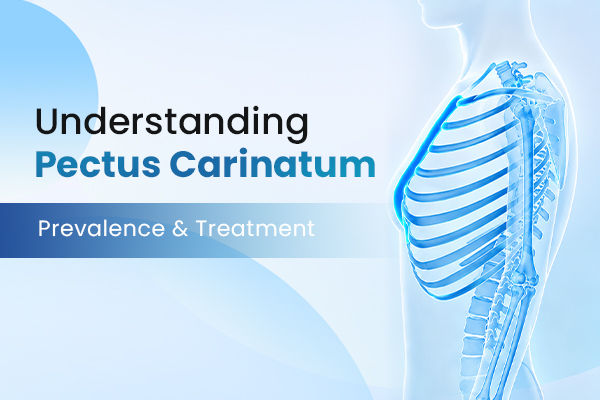
What Is Pectus Carinatum?
Pectus carinatum is an anterior chest wall deformity characterized by protrusion of the sternum and ribs. The prominence may be symmetrical or asymmetrical and can appear ridge-like, hull-like, peak-like, or spherical. Some patients also have relative depressions beside or below the prominent area.
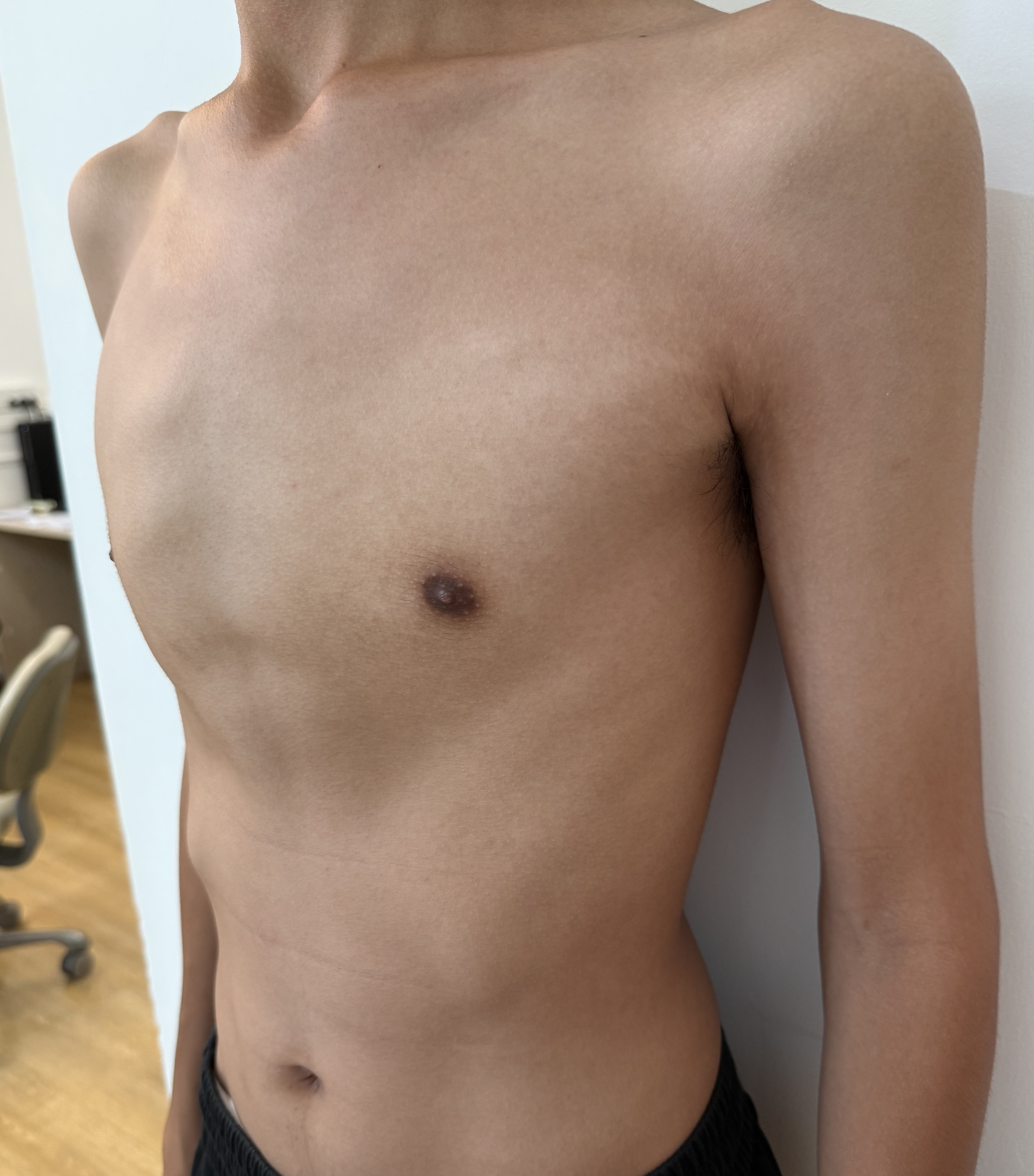 pectus carinatum
The chest wall protrusion is the most characteristic feature, but the underlying factors can differ among patients.
What Causes Pectus Carinatum?
Currently, there are various theories about the exact cause of pectus carinatum, which may involve multiple factors. Possible causes or contributing factors include:
- Developmental factors: Imbalanced growth of the sternum and costal cartilage may contribute to forward protrusion of the anterior chest wall.
- Genetic factors: Some patients have a family history, suggesting that genetic susceptibility may play a role.
- Nutritional or metabolic factors: Conditions that weaken bone development, such as rickets, may contribute to pectus carinatum in some children.
- Chronic or associated conditions: Certain congenital or chronic illnesses may be associated with abnormal chest wall development.
- Secondary changes after surgery or trauma: Chest wall trauma or surgery involving the sternum can alter chest wall structure and may lead to a secondary protrusion deformity.
Learn more about the causes of pectus carinatum: Understanding Pectus Carinatum Causes: Primary vs. Secondary
Symptoms and Potential Effects
Most patients with pectus carinatum do not have obvious physical symptoms. Because the chest wall protrudes outward, the deformity typically does not cause direct compression of the heart or lungs. In more severe cases, some patients may experience shortness of breath, fatigue, or reduced stamina.
Chest appearance can also create a psychological burden. Some patients experience low self-esteem, anxiety, or social discomfort, and chest tightness or pain may sometimes accompany that stress.
The physical and psychological impact of pectus carinatum can therefore vary considerably from one patient to another.
Is Pectus Carinatum Common?
Yes. Pectus carinatum is one of the more common chest wall deformities. Differences in study populations and research methods mean that no single frequency estimate applies to every population.
| Epidemiologic Evidence | Reported Finding |
|---|---|
| Estimated incidence | A narrative review reports an estimated incidence of approximately 1 per 2,500 live births. [1] |
| Pooled pediatric prevalence | A systematic review and meta-analysis reports a pooled prevalence of approximately 0.6% among people under 18. [2] |
| School-based prevalence | In a screening study of 15,862 students aged 12–19 years, pectus carinatum was identified in 0.7% of participants. [3] |
Pectus carinatum is more common in males, with males reported to be affected about four times as often as females.[1] It often becomes more noticeable during adolescence. As the body grows rapidly, the chest wall protrusion may become more prominent, making previously subtle deformities easier to notice. This is also when many cases are first noticed or evaluated.
Famous People With Pectus Carinatum
There are relatively few public figures who have openly discussed having pectus carinatum, but some have shared their experiences.
- Ethan Daniel Corbett: The actor has spoken about being born with pectus carinatum and how he became more confident after struggling with body image during childhood.
- Mathew Horne: The British actor and comedian has openly referred to having pectus carinatum.
For people who feel self-conscious about a visible chest difference, these stories may offer some reassurance and show that the condition does not define a person’s abilities or career.
Can Pectus Carinatum Get Worse Over Time?
Yes. Pectus carinatum may progress as the chest grows, but the degree of change varies between patients.
In younger children, the protrusion may be relatively mild. During a growth spurt, the anterior chest wall can change quickly, making the prominence more obvious or extending the area involved.
Chest wall flexibility also changes with age. A more flexible chest may respond differently to external pressure than a rigid chest wall, which is one reason age and physical examination matter when treatment is being considered.
Surgical Treatments for Pectus Carinatum
Not every patient needs surgery. For younger patients with a flexible chest wall and a suitable deformity, bracing may be considered as an initial treatment.
Surgical treatment may be considered when:
- the deformity is severe, rigid, or markedly asymmetrical;
- bracing is not suitable or has not provided adequate correction;
- the protrusion has a substantial effect on daily life or body image;
- the deformity is secondary to previous surgery.
Because these factors vary between patients, the choice of surgery is individualized according to age, chest wall rigidity, deformity pattern, previous treatment, and the patient’s concerns. Surgical options range from traditional open correction to minimally invasive bar-based techniques.
Traditional Open Surgery
Traditional open surgery involves a relatively long incision to directly correct the chest wall deformity.
- Operating Principle: A relatively long incision is made on the chest to expose the affected area. Costal cartilage is resected, and the ribs are then fixed to the sternum to reduce the anterior protrusion.
- Limitations: Compared with minimally invasive techniques, open correction involves more extensive tissue dissection and usually results in a more noticeable scar. Extensive cartilage resection also requires particular caution in younger patients whose chest wall is still developing.
Abramson Procedure
The Abramson procedure introduced a minimally invasive, bar-based approach to pectus carinatum correction.
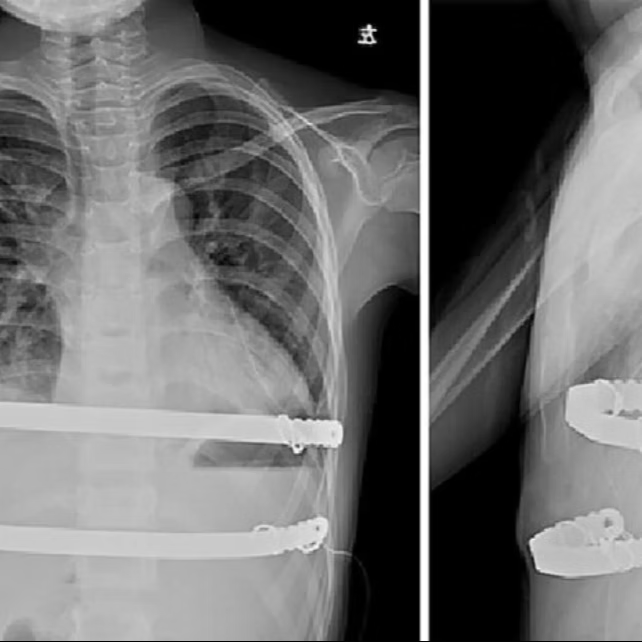
- Operating Principle: A correction bar is placed over the protruding anterior chest wall through lateral incisions. Short fixation bars are first secured to the ribs, and the main shaping bar is then attached to these fixation bars to apply inward pressure.
- Key advance: Compared with traditional open surgery, the procedure avoids a long anterior incision and extensive chest wall resection.
- Limitation: Because the main bar is fixed indirectly through short fixation bars, achieving stable fixation while applying corrective pressure can be technically challenging.
Wenlin Procedure
Developed by Dr. Wenlin Wang, the Wenlin procedure is a minimally invasive surgical technique for correcting pectus carinatum and other convex chest wall deformities. It incorporates multiple innovative surgical techniques and concepts intended to mitigate key limitations and risks of the Abramson procedure.
- Operating Principle: Two approximately 2 - 5 cm incisions are made on opposite sides of the chest wall. Steel wires are passed around the ribs through the incisions. Pre-shaped bars are placed on the surface of the protruding chest wall. While the bar is pressed inward, the wires pull the bony structures on both sides outward, gradually reducing the central protrusion.
- Key Refinement: Unlike the indirect fixation used in the Abramson procedure, the Wenlin procedure uses the “Wang Technique” to secure the shaping bars directly to the ribs with steel wires. The number and position of the bars and fixation points can be adjusted according to the deformity, while Pre-shaping may be used in severe or rigid cases to facilitate correction.
- Considerations: Surgical planning should account for deformity severity, chest wall rigidity, and the number and position of shaping bars. Severe or rigid deformities may require Pre-shaping, and the procedure should be performed by an experienced surgical team.
Overall, pectus carinatum surgery has evolved from traditional open surgery toward minimally invasive bar-based correction. However, the choice of procedure still depends on the patient’s chest wall anatomy, deformity characteristics, and individual needs.


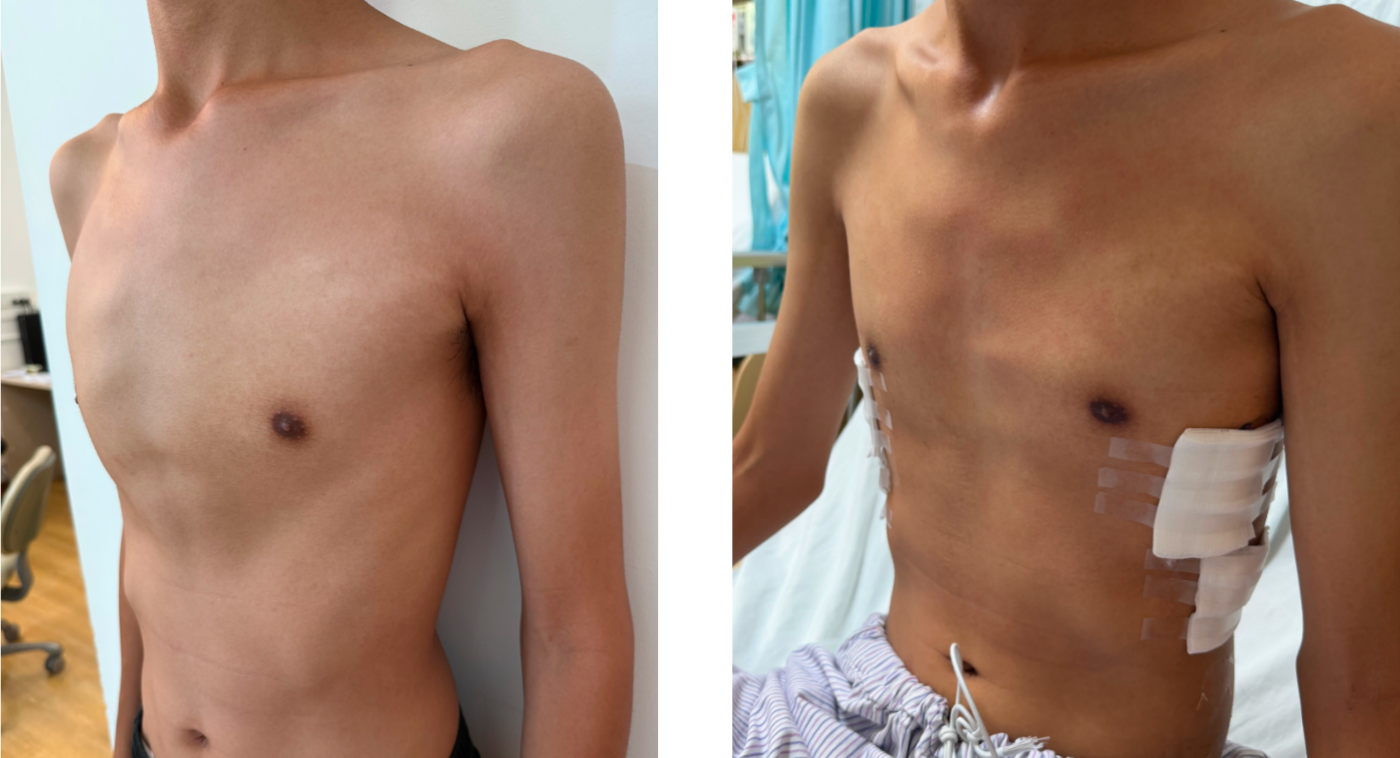

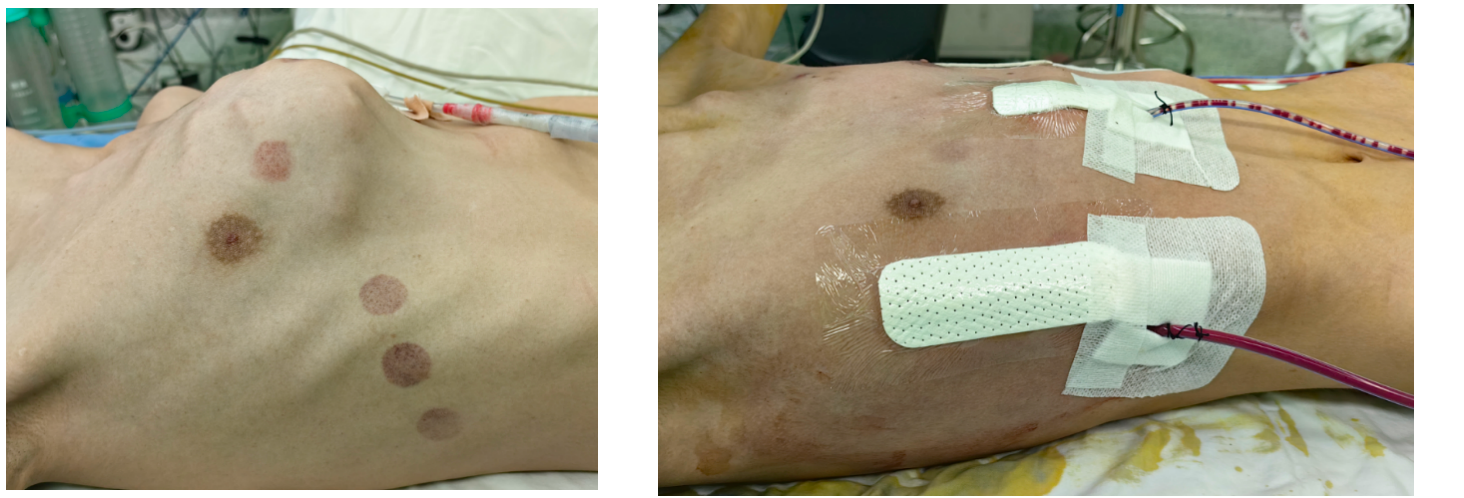

Pectus Carinatum Care at ICWS
The Wenlin procedure, developed by Dr. Wenlin Wang, is one of the specialized techniques used by our team to treat pectus carinatum and other convex chest wall deformities. At ICWS, we focus on the diagnosis and surgical treatment of chest wall disorders, including complex and uncommon deformities. Treatment planning is based on chest wall structure, deformity characteristics, and individual clinical needs.
For patients and families seeking a clearer understanding of pectus carinatum, its progression, or available treatment options, contact ICWS to arrange a specialist evaluation and discuss an individualized treatment plan.
References
[1] Janssen N, Coorens NA, Franssen AJPM, et al. Journal of Thoracic Disease. 2024;16(2):1687–1701. doi:10.21037/jtd-23-957.
https://pmc.ncbi.nlm.nih.gov/articles/PMC10944748/
[2] Pu Y, Jian Y, Huang W, Yang Z. Archives of Medical Science. 2025;21(4):1421–1431. doi:10.5114/aoms/188876.
https://pmc.ncbi.nlm.nih.gov/articles/PMC12509807/
[3] Katrancioglu O, Akkas Y, Sahin E, Demir F, Katrancioglu N. Incidence of chest wall deformity in 15,862 students in the province of Sivas, Türkiye. Turk J Thorac Cardiovasc Surg. 2023;31(1):116-122. doi:10.5606/tgkdc.dergisi.2023.23325.
.png)
.png)