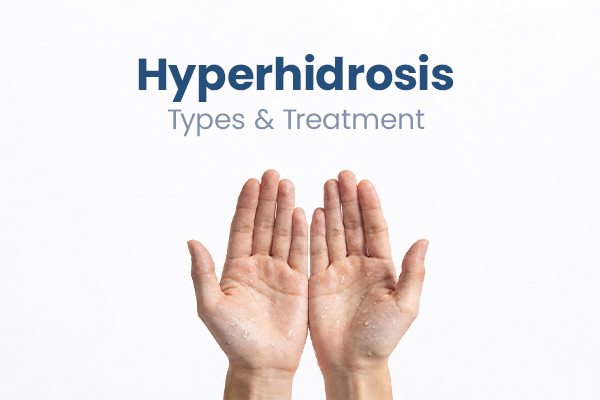

Palmoplantar hyperhidrosis is excessive sweating of both the palms and soles beyond the body's cooling needs.[1] It may be primary or secondary to another disease or medication, and the moisture can interfere with writing, device use, footwear, walking, work, and social interactions. This article explains the shared physiology, clinical assessment, nonsurgical care, and site-specific treatment planning.
Why Do the Palms and Feet Sweat Together?
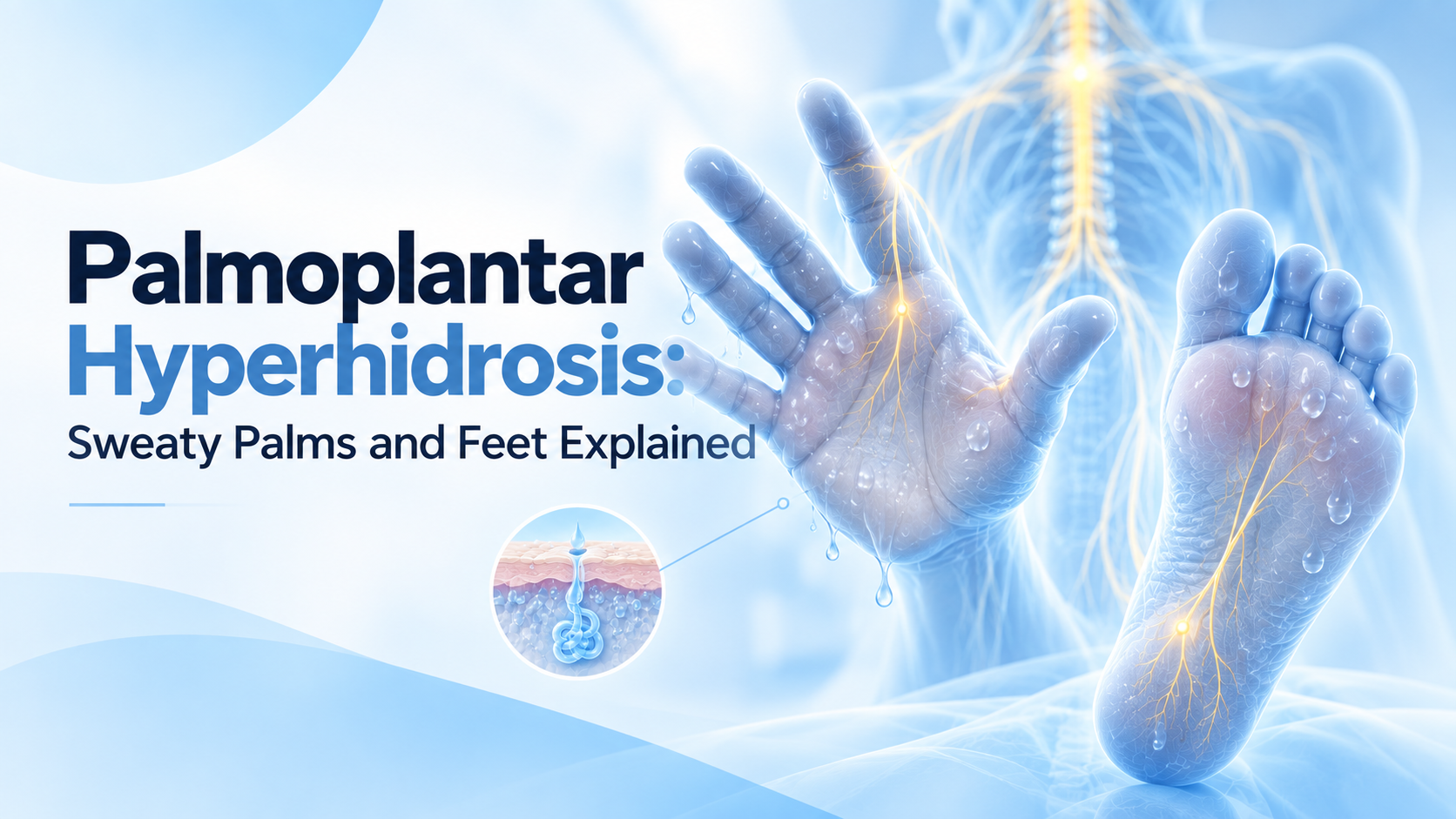
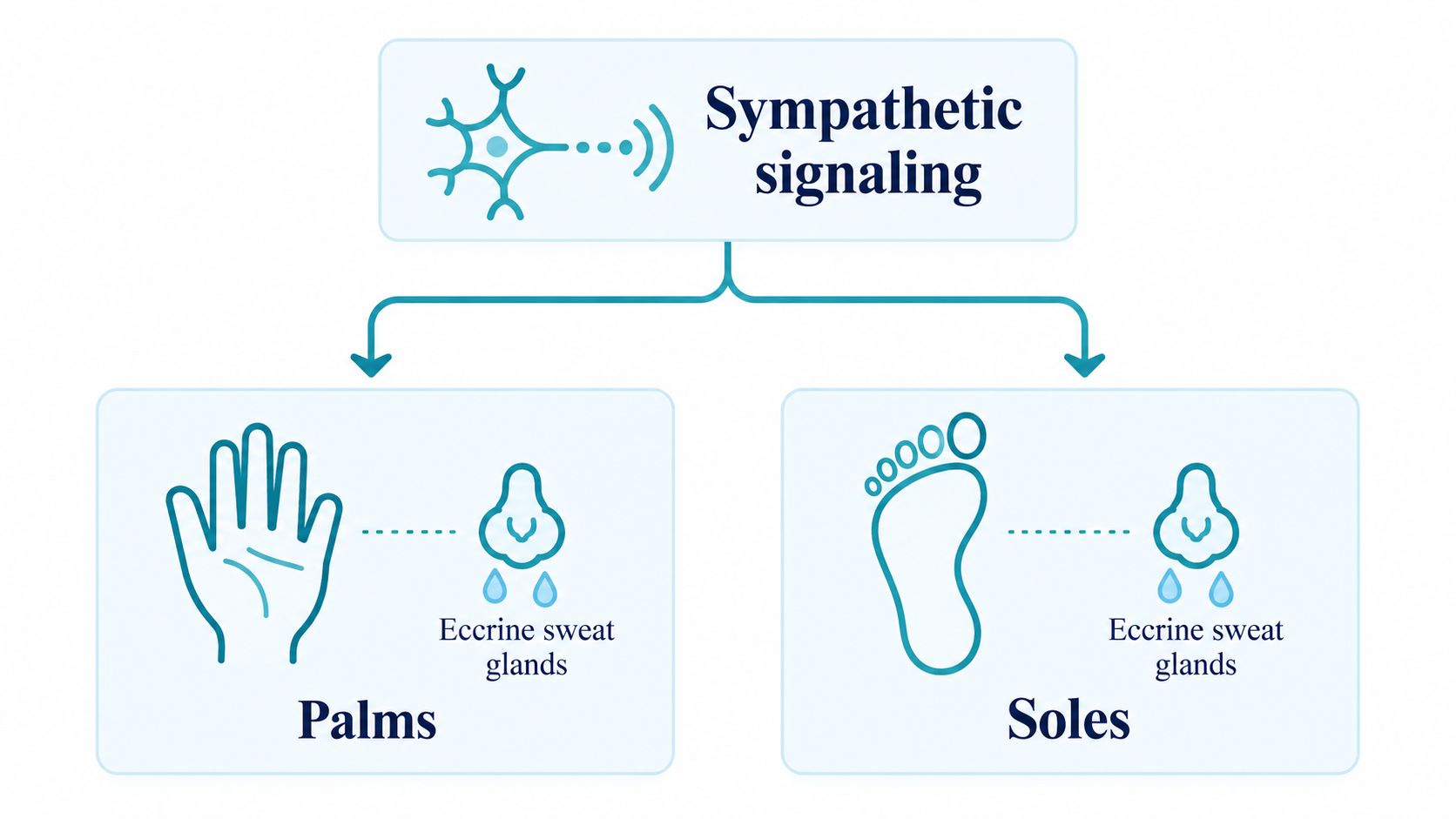
The palms and soles contain a high density of eccrine sweat glands, which are controlled mainly by sympathetic cholinergic signaling,[2] and sweating at both sites can increase with emotional stress or mental concentration. This helps explain why someone may ask, "Why do my hands and feet sweat so much?" even in a cool room or without exercise.
In primary focal hyperhidrosis, the excessive sweating is thought to reflect abnormal neural stimulation of sweat glands at one or more focal sites. Because the hands and feet share this pattern of neural control, palmar hyperhidrosis and plantar symptoms can occur during the same episode, although one site may be more severe. The precise central mechanism remains incompletely understood, but the similar patterns of sympathetic control help explain why excessive sweating frequently affects both sites.
How Is Palmoplantar Hyperhidrosis Diagnosed?
Diagnosis is mainly based on clinical evaluation and focuses on symptom history, sweating distribution, and possible secondary causes.
1. Understanding the Sweating Pattern
- Record when the sweating began, how often it occurs, and whether it first appeared in childhood or adolescence.
- Ask about triggers and sleep. Primary focal sweating is usually absent during sleep, while persistent night sweating, sudden onset, or a new generalized pattern calls for closer evaluation.
- Document the effect on writing, device use, footwear, walking, work, school, and social contact.
2. Identifying the Affected Area
- Examine the palms and soles for visible moisture and signs such as whitish skin or peeling, then check whether the underarms, face, or other areas are also involved.
- Confirm whether the pattern is bilateral and localized. One-sided or generalized sweating can require a broader evaluation.
- Assess the severity of sweating and its impact on daily life using a standardized tool, such as the Hyperhidrosis Disease Severity Scale (HDSS), when helpful for treatment planning.
3. Checking for Possible Secondary Causes
- Review medical conditions, current medications, family history, and accompanying symptoms that could indicate secondary hyperhidrosis.
- Add targeted laboratory or imaging tests only when the history or examination suggests an underlying cause.
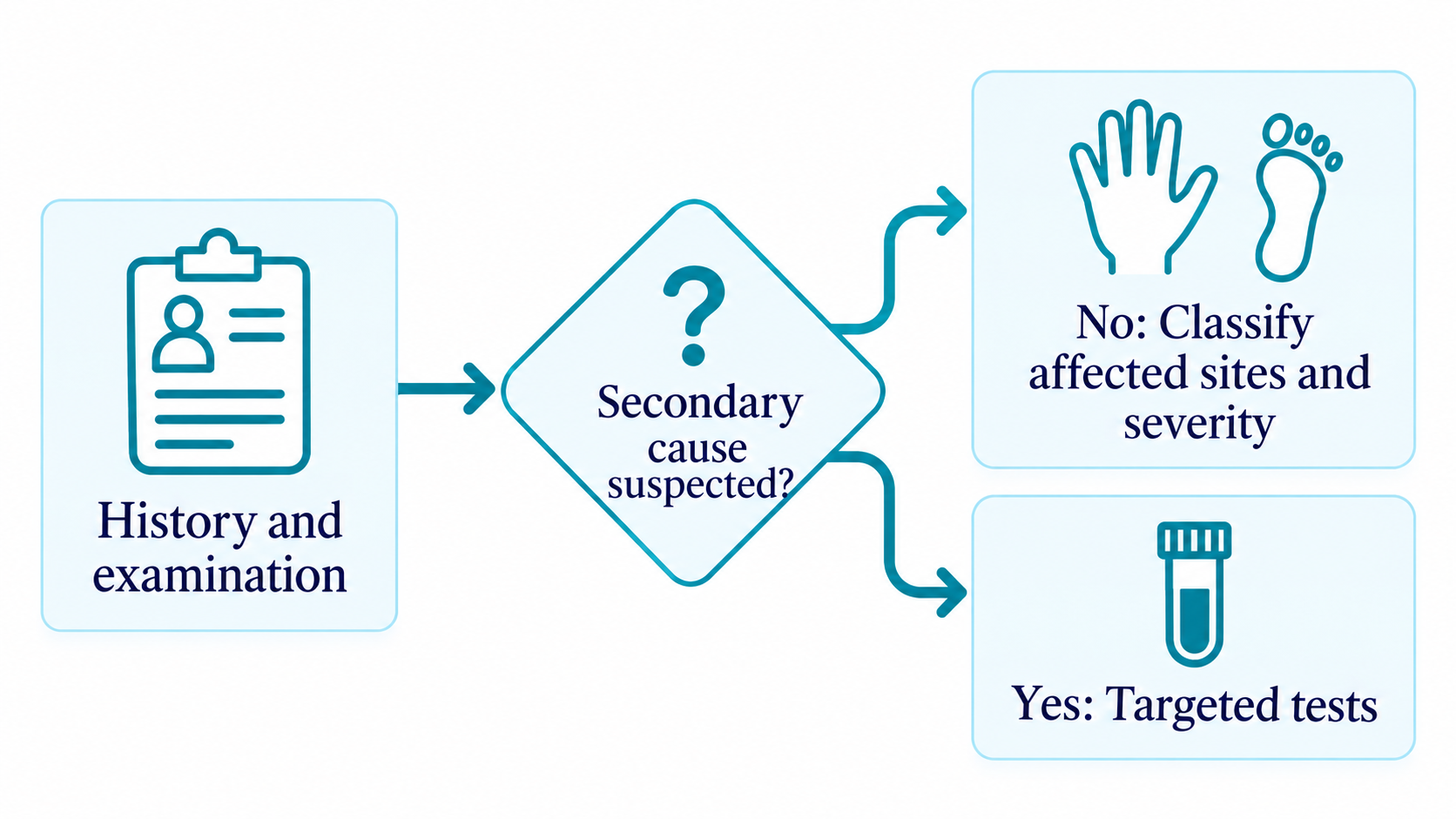
If another condition or medication is responsible, treatment should first focus on addressing the underlying cause. For primary focal hyperhidrosis, the assessment helps determine which areas need treatment and which treatment approach is most appropriate.
How Can Sweaty Palms and Feet Be Treated Without Surgery?
After diagnosis, people with sweaty hands and feet usually begin with nonsurgical hyperhidrosis treatment. The table compares the main options, how they are used, and the practical considerations that can influence treatment choice.[3,4]
| Treatment Option | How It Is Used | Practical Considerations |
| Topical antiperspirants | Applied to completely dry skin to reduce the amount of sweat reaching the surface. | Often an accessible first option; skin irritation can limit use. |
| Tap-water iontophoresis | The hands or feet are placed in water trays while a low electrical current is applied. | Repeated sessions and maintenance are needed; home treatment may be possible after training. |
| Botulinum toxin injections | Local injections reduce the nerve signal that stimulates sweat release. | Effects are temporary and treatment must be repeated; injections into the palms or soles can be uncomfortable. |
| Oral medications | Systemic medicines reduce sweating in selected patients. | Systemic adverse effects can limit long-term use, so regular medical review is important. |
| Foot moisture care (supportive) | Change damp socks, rotate breathable shoes, and use absorbent foot powder or insoles. | Improves skin and footwear comfort but does not replace treatment for plantar hyperhidrosis. |
Treatment for Palmoplantar hyperhidrosis can be tailored or combined based on which site causes greater disruption to daily life, skin tolerance, the feasibility of repeated treatment sessions, and the patient’s willingness to continue maintenance therapy.
When symptoms remain severe despite conservative treatment, patients may consult a specialist to discuss procedures taregeting the relevant sympathetic pathways.
How Does ICWS Treat Severe Palmoplantar Hyperhidrosis?
At the Institute of Chest Wall Surgery (ICWS),, care is coordinated across thoracic surgery, anesthesia, imaging, and day-surgery services. Although the palms and soles share sympathetic regulation, the relevant procedural targets are different. We therefore assess the hand and foot components separately when planning treatment for severe palmoplantar hyperhidrosis.
T4 Thoracic Sympathectomy for Palmar Hyperhidrosis
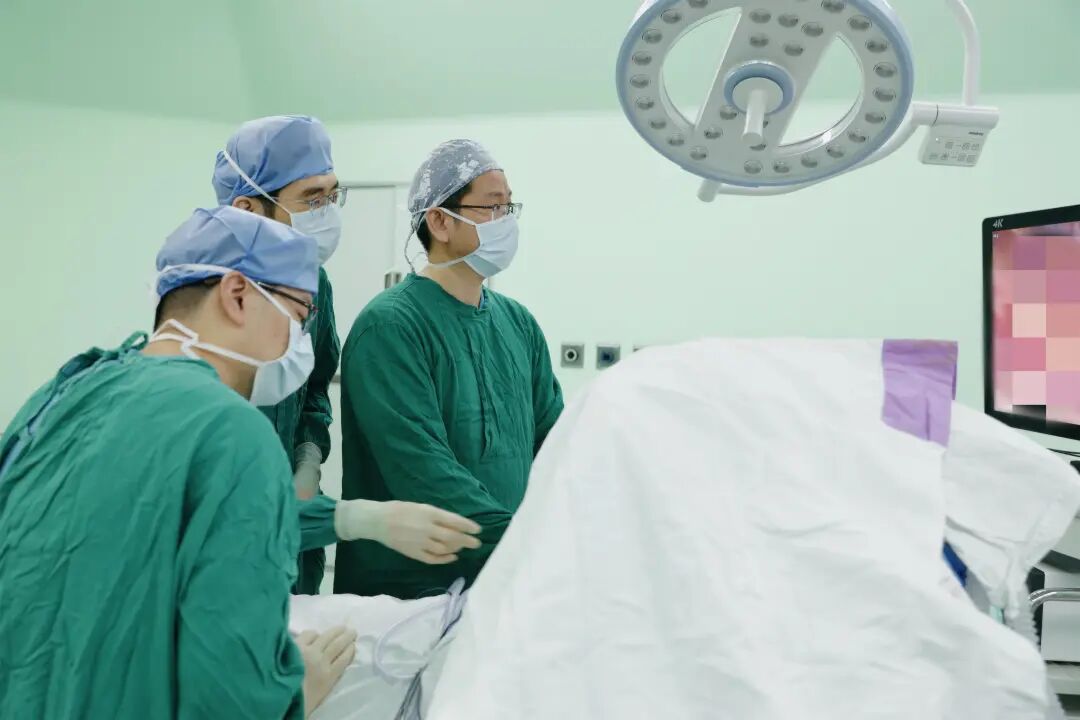
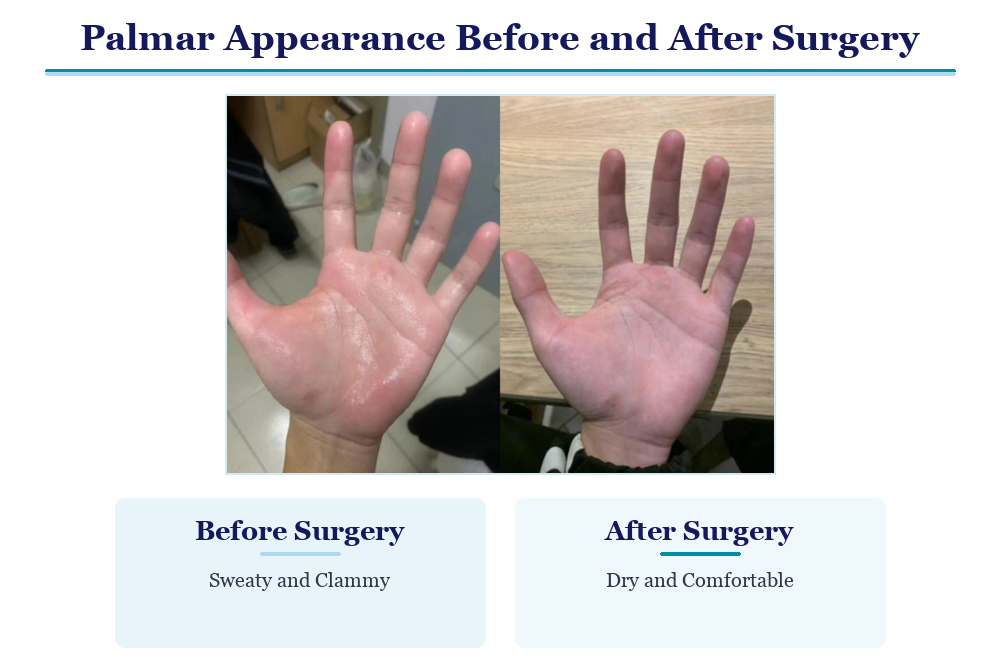
Endoscopic thoracic sympathectomy (ETS) is an effective surgical option for selected patients with severe palmar hyperhidrosis who have not achieved adequate symptom conrtol with conservative treatment. At ICWS, minimally invasive T4 thoracic sympathectomy is used for eligible patients with severe primary palmar hyperhidrosis that continues to disrupt daily life.
- Treatment target: The T4-level thoracic sympathetic pathway that carries signals to the palmar sweat glands.
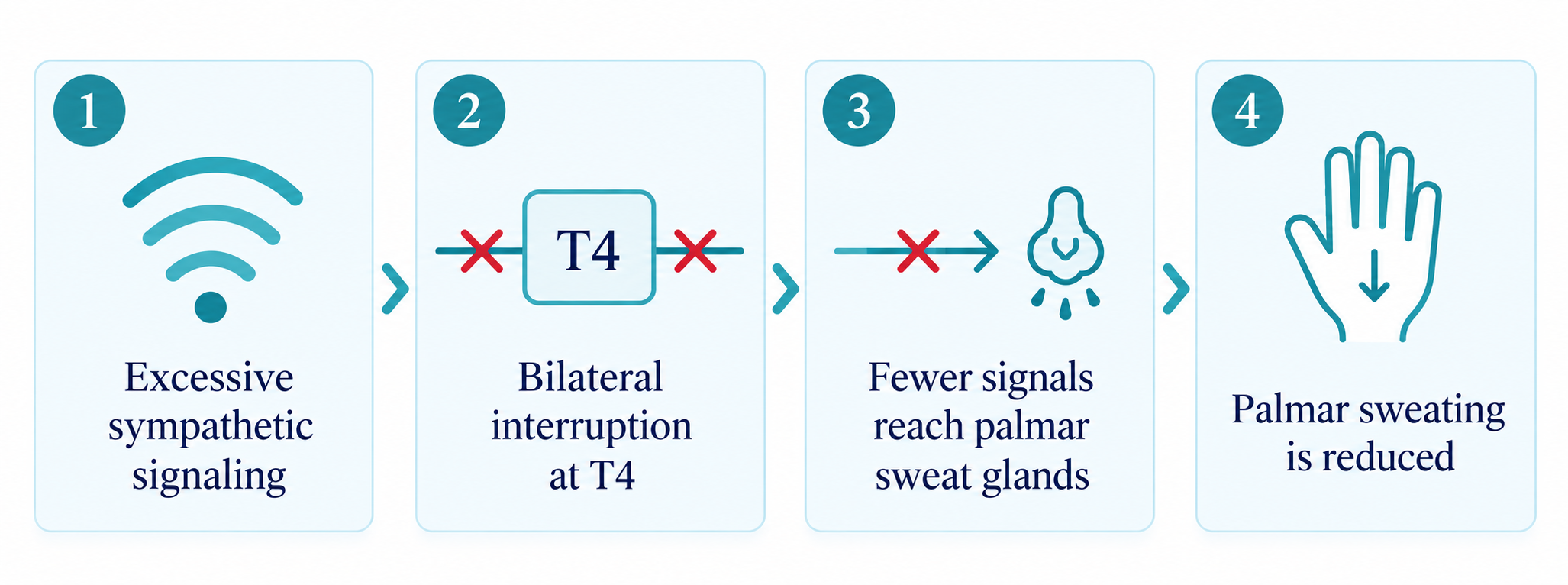
- Treatment goal: Reliable control of hand sweating while limiting the risk and severity of compensatory sweating in other areas.
- Planning factors: The confirmed primary pattern, symptom severity, general health, previous treatment, and the patient's priorities regarding hand dryness and compensatory sweating.
Relevant case: Surgery for severe palmar hyperhidrosis after conservative treatment
Lumbar Sympathetic Radiofrequency Ablation for Plantar Hyperhidrosis
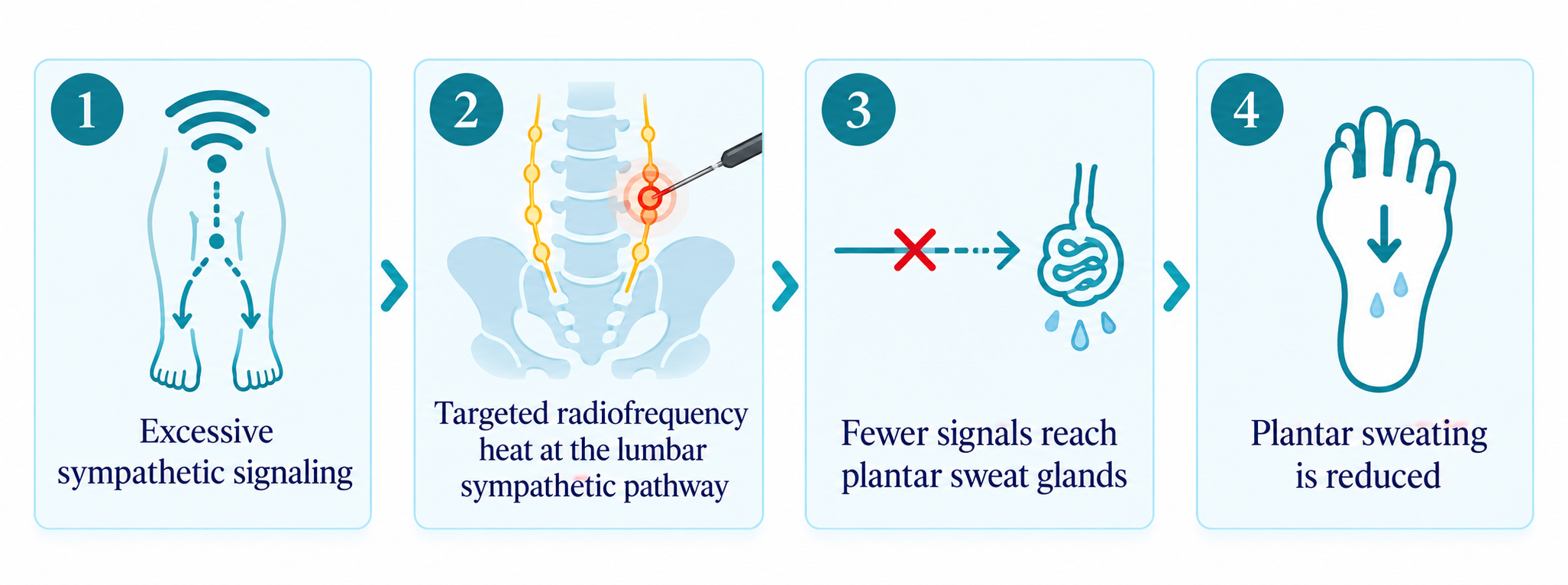
Lumbar sympathetic radiofrequency ablation is a foot-directed treatment option for plantar hyperhidrosis. It uses radiofrequency thermocoagulation to target the relevant lumbar sympathetic pathway, reducing excessive stimulation of the plantar sweat glands. This can reduce foot sweating while also promoting vasodilation in the lower extremities and increasing foot temperature.[5]
- Who is considered: Patients whose foot sweating remains severe, impairs daily life, and has not responded sufficiently to appropriate conservative treatment.
- How treatment is planned: The distribution and severity of foot sweating, previous treatment, overall health, and the expected benefit-risk balance are reviewed together.
- Procedure setting: The treatment is performed under local anesthesia, followed by postoperative observation.
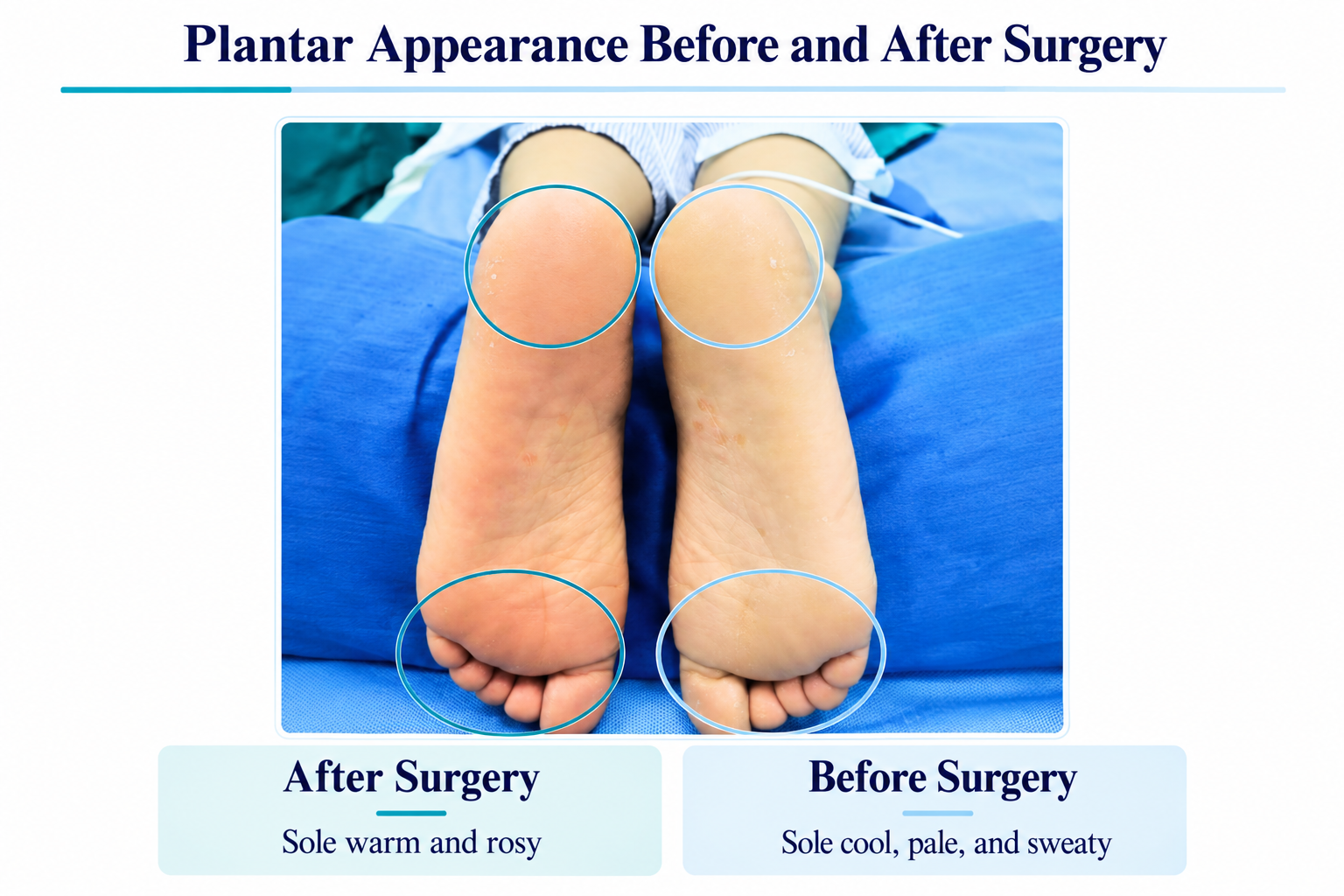
Discharge timing depends on postoperative recovery. Eligible patients follow our day-surgery pathway and can usually leave the hospital the same day after satisfactory observation.
How Treatment May Be Sequenced
When severe hand and foot sweating occur together, ICWS generally considers the following staged plan:
1. Treat severe palmar hyperhidrosis first when T4 sympathectomy is indicated.
2. Observe whether plantar sweating changes after T4 surgery. Some patients notice improvement, but the degree and persistence differ among patients.[6]
3. Reassess persistent plantar hyperhidrosis after observation. If foot sweating remains severe, a separate evaluation can determine whether lumbar sympathetic radiofrequency ablation is appropriate. Treating both sites at the same time may increase compensatory sweating.
If you experience persistent excessive sweating of the palms and soles, contact ICWS for a specialist evaluation. With thoracic and foot-directed options available within one coordinated service, our team can determine which symptoms require procedural treatment and plan care around the expected benefit and compensatory-sweating risk.
References
[1] Nawrocki S, Cha J. The Etiology, Diagnosis, and Management of Hyperhidrosis: A Comprehensive Review: Etiology and Clinical Work-Up. Journal of the American Academy of Dermatology. 2019;81(3):657-666. https://pubmed.ncbi.nlm.nih.gov/30710604/
[2] Asahina M, Poudel A, Hirano S. Sweating on the Palm and Sole: Physiological and Clinical Relevance. Clinical Autonomic Research. 2015;25(3):153-159. https://pubmed.ncbi.nlm.nih.gov/25894655/
[3] International Hyperhidrosis Society. Primary Focal Palmar Hyperhidrosis: Clinical Treatment Guidelines. https://www.sweathelp.org/treatments-hcp/clinical-guidelines/primary-focal-hyperhidrosis/primary-focal-palmar.html
[4] International Hyperhidrosis Society. Primary Focal Plantar Hyperhidrosis: Clinical Treatment Guidelines. https://www.sweathelp.org/treatments-hcp/clinical-guidelines/primary-focal-hyperhidrosis/primary-focal-plantar.html
[5] Kim SW. Lumbar Sympathetic Radiofrequency Neurotomy in Plantar Hyperhidrosis. Journal of Korean Neurosurgical Society. 2007;41(1):27-29. https://www.kci.go.kr/kciportal/ci/sereArticleSearch/ciSereArtiView.kci?sereArticleSearchBean.artiId=ART001039932
[6] Wolosker N, Ishy A, Yazbek G, et al. Objective Evaluation of Plantar Hyperhidrosis After Sympathectomy. Clinics. 2013;68(3):311-315. https://pmc.ncbi.nlm.nih.gov/articles/PMC3611758/